ReviewCC BY 4.0
Mapping Global Pain and Trauma: A Seven-Domain Framework and the Fundamental Peace Index for the Journey from Shadow to Fundamental Peace
Luis Miguel Gallardo1 ORCID 0009-0005-3222-6092
- 1Yogananda School of Spirituality and Happiness, Shoolini University, Solan, Himachal Pradesh, India; World Happiness Foundation
- Published
- October 2026
- Version
- 1.0
- Issue
- Vol. 1, No. 1 (2026)
- Article number
- JHFP-2026-006
- Licence
- CC BY 4.0
- Published by
- World Happiness Foundation Research Lab
Abstract
Background
More than one billion people live with a mental health condition, roughly seven in ten adults experience at least one traumatic event in their lifetime, and about one in five people living in conflict-affected settings has a current mental disorder. Yet these figures describe only the clinically visible part of human suffering. Loneliness, shame, structural deprivation, loss of meaning, chronic pain and ecological grief sit largely outside the indicators that guide policy, and the disciplines that study them (psychiatry, public health, peace studies, contemplative science) rarely share a common map.
Objective
This review proposes such a map. It presents the Global Pain and Trauma Map (GPTM), a seven-domain taxonomy of human suffering, and its inverse, the Fundamental Peace Index (FPI = 100 − GPTM), and links both to a staged pathway from "shadow" states to Fundamental Peace.
Methods
Integrative narrative review of global epidemiology (Global Burden of Disease, WHO World Mental Health Surveys, conflict meta-analyses), trauma and attachment theory, contemplative and hypnosis neuroscience, and the author's Shadow-Gift-Essence (S-G-E) framework; every statistic was re-checked against its primary source for this version. We also report a descriptive analysis of the GPTM platform dataset (version 4.9; 196 countries and 321 communities, each scored 0–100 on seven domains).
Framework
The seven domains are Individual/Psychological (D1), Relational/Social (D2), Collective/Cultural (D3), Structural/Systemic (D4), Existential/Spiritual (D5), Somatic/Biological (D6) and Environmental/Planetary (D7). A place's GPTM composite is the mean of its seven domain scores; its FPI is 100 minus that composite. Across the 196 countries the mean composite was 59.1 (SD 8.8; FPI 40.9); no country reached FPI 60, and 26 exceeded FPI 50. Structural pain (D4) was the highest-scoring domain on average and existential pain (D5) the lowest, with sharp regional contrasts. The current scores are expert-rated estimates, not measurements; their inter-domain correlations (r up to 0.95 between D1 and D2) suggest substantial rater halo. We describe a field instrument, the GPTM Village Profile (GPTM-V), that applies the same formula to key-informant ratings, and grade each proposed intervention by strength of evidence.
Conclusions
The GPTM is best understood as a structured hypothesis about where suffering concentrates and how it might be relieved across levels, from the individual to the planetary. Its value now is heuristic and organising; its scientific value depends on the validation programme set out here, beginning with transparent scoring rules, independent raters and convergence with population survey data.
Keywords
- global mental health
- trauma
- suffering
- Global Pain and Trauma Map
- Fundamental Peace Index
- Fundamental Peace
- shadow work
- Shadow-Gift-Essence
- composite indicators
- Happytalism
Read the paper
Full text
The complete paper, as registered with its DOI. Section links below jump within this page.
Table of Contents
- Introduction
- Approach and Methods
- The Global Landscape of Suffering
- A Seven-Domain Taxonomy of Human Suffering
- The Architecture of the Shadow
- The GPTM Metric and the Fundamental Peace Index
- From Shadow to Fundamental Peace: Intervention Pathways
- Fundamental Peace as the Target State
- Implementation: From the Individual to the Planetary
- Research Agenda
- Limitations
- Conclusion Editorial Note: Revisions from the Preprint Declarations References
1. Introduction
1.1 Why a map of suffering is needed
Global mental health statistics are sobering. The World Health Organization (WHO) estimates that more than one billion people are living with a mental health condition (World Health Organization [WHO], 2025a). In the Global Burden of Disease (GBD) 2019 round, mental disorders accounted for 125.3 million disability-adjusted life years (DALYs), 4.9% of the global total, and 14.6% of all years lived with disability, placing them among the ten leading causes of burden worldwide (GBD 2019 Mental Disorders Collaborators, 2022). Depressive disorders alone affected an estimated 279.6 million people and anxiety disorders 301.4 million in that round.
These figures, stark as they are, capture only the part of human suffering that reaches a diagnostic threshold. Beneath them lies a wider field of pain: the shame that silences survivors of abuse, the grief of families who have lost children to violence, the exhaustion of people who live in chronic poverty, the existential despair of those who have lost meaning, the intergenerational trauma carried by descendants of genocide, slavery and colonisation, and the anxiety of a generation facing ecological breakdown (Benjet et al., 2016; Hickman et al., 2021; Yehuda & Lehrner, 2018).
Each existing index sees part of this field. The GBD counts disease burden; the World Happiness Report asks people to rate their lives on a 0–10 ladder; the Global Peace Index counts conflict and militarisation. None was designed to show, in one frame, how psychological, relational, collective, structural, existential, somatic and ecological suffering combine in a given place. Meanwhile the disciplines that hold the relevant knowledge—psychiatry, public health, trauma studies, peace research and contemplative science—rarely share concepts or measures.
1.2 Aims and contributions
This review has four aims:
- To summarise, with verified sources, what is known about the global distribution of pain and trauma.
- To set out a seven-domain taxonomy of suffering that can serve as a shared map across disciplines.
- To specify the Global Pain and Trauma Map (GPTM) as a scoring framework, and its inverse, the Fundamental Peace Index (FPI = 100 − GPTM), and to describe transparently what the current GPTM dataset contains and what it cannot yet support.
- To link each domain to intervention pathways graded by strength of evidence, within a staged model of transformation from "shadow" to Fundamental Peace.
The framework is offered as an organising hypothesis, not as an established measurement system. We say clearly throughout which elements rest on strong empirical evidence, which are theoretical, and which are practice-based proposals awaiting test.
1.3 Relation to the preprint
An earlier version of this paper was posted as a preprint on 7 April 2026 (Gallardo, 2026a). The present version of record corrects several statistics and citations, reframes Hawkins' Map of Consciousness as a non-validated heuristic, removes a recommendation to use muscle testing, adds the full seven-domain GPTM table, the scoring method, a descriptive analysis of the platform dataset, the GPTM Village Profile, evidence grades and a limitations section. The changes are listed in the Editorial Note.
2. Approach and Methods
2.1 Review design
This is an integrative narrative review, chosen because the question—how suffering is distributed and how its domains relate—spans literatures with incompatible designs (burden-of-disease modelling, cross-national surveys, clinical trials, qualitative and theoretical work) that cannot be pooled. Sources were drawn from: (1) GBD studies and WHO reports on mental disorders, violence, loneliness and mental health systems; (2) the WHO World Mental Health Surveys on trauma exposure and post-traumatic stress disorder (PTSD); (3) meta-analyses of mental disorders in conflict-affected populations; (4) foundational work in attachment, trauma, polyvagal and Internal Family Systems theory; (5) meta-analyses and trials in hypnosis, mindfulness, yoga and psychedelic-assisted therapy; and (6) the author's own published frameworks.
For this version, every quantitative claim in the preprint was re-checked against the primary publication or the issuing agency. Where a figure could not be traced to a primary source it was removed or replaced (see the Editorial Note).
2.2 Evidence grades
To keep empirical and theoretical claims visibly apart, each intervention in Sections 4 and 7 carries an evidence grade:
- A — Established: multiple randomised controlled trials (RCTs) and at least one meta-analysis showing benefit for the stated outcome.
- B — Supported: some RCTs or consistent controlled studies, with limitations (small samples, short follow-up, heterogeneity).
- C — Preliminary: observational, qualitative, case-series or pilot evidence only.
- D — Proposed: theoretical or practice-based; not yet tested in controlled studies.
2.3 Analysis of the GPTM platform dataset
The GPTM is published as an open interactive platform (World Happiness Foundation, 2026). We extracted every scored record from version 4.9 (as published on 13 October 2026): 196 countries, each assigned to one of seven world regions, and 321 named cities, communities and peoples. Each record carries seven integer domain scores (0–100, higher = more suffering). We computed the composite (rounded mean of the seven domains), the FPI, descriptive statistics by domain and region, the distribution across FPI bands, the matrix of Pearson correlations between domains across countries, and Cronbach's alpha treating domains as items. The analysis is descriptive. No inferential claims are made because the scores are expert estimates rather than sampled measurements (Section 6.4).
3. The Global Landscape of Suffering
3.1 Mental disorders
GBD estimates are the most complete source on the burden of mental disorders, but successive rounds differ in method and coverage, and figures from different rounds should not be mixed. In GBD 2019, mental disorders affected about 970 million people, accounted for 125.3 million DALYs and 14.6% of all years lived with disability (GBD 2019 Mental Disorders Collaborators, 2022). WHO's 2025 global update put the number of people living with a mental health condition at more than one billion (WHO, 2025a). GBD does not model PTSD as a separate cause, so global PTSD prevalence must be taken from survey data instead (Section 3.2).
The burden is unevenly met. Governments spend a median of about 2% of their health budgets on mental health (WHO, 2025b), and in low- and middle-income countries between 76% and 85% of people with severe mental disorders receive no treatment (Demyttenaere et al., 2004; WHO, 2013). Depression is about 1.5 times as common among women as among men (WHO, 2025c).
3.2 Trauma exposure and PTSD
The WHO World Mental Health Surveys, covering 68,894 adults in 24 countries, found that more than 70% of respondents had experienced at least one of 29 traumatic event types in their lifetime, and 30.5% had experienced four or more. Five event types—witnessing death or serious injury, the unexpected death of a loved one, being mugged, a life-threatening car accident, and a life-threatening illness or injury—accounted for more than half of all exposures (Benjet et al., 2016). Cross-nationally, lifetime PTSD prevalence was 3.9% in the general population and 5.6% among the trauma-exposed (Koenen et al., 2017). The conditional risk of PTSD was highest after interpersonal and sexual violence, rape in particular (Kessler et al., 2017).
Trauma, in other words, is nearly universal; PTSD is not. What distinguishes the two is, in large part, whether the experience can be integrated—whether the nervous system returns to safety and the memory becomes part of a coherent personal narrative (Herman, 1992; van der Kolk, 2014).
3.3 Conflict-affected populations
Armed conflict concentrates suffering. A WHO-led systematic review and meta-analysis estimated that 22.1% of people living in conflict-affected settings have depression, anxiety, PTSD, bipolar disorder or schizophrenia at any point in time, about one in five (Charlson et al., 2019). Among adult war survivors, a meta-analysis of representative surveys estimated prevalence of 26.5% for PTSD and 23.3% for major depression (Hoppen et al., 2021). Hoppen and Morina (2019) estimated that some 1.45 billion people lived in war-affected countries between 1989 and 2015, of whom around 354 million adult survivors had PTSD and/or major depression. The effects extend across generations through parenting, narrative and possibly epigenetic pathways (Yehuda & Lehrner, 2018).
3.4 Childhood adversity
In the original Adverse Childhood Experiences (ACE) Study, more than half of 9,508 adult respondents reported at least one category of childhood adversity and 6.2% reported four or more; those with four or more had 4- to 12-fold higher risks of alcoholism, drug abuse, depression and suicide attempts (Felitti et al., 1998). In the full cohort of 17,337 adults, 63.9% reported at least one ACE and 12.5% four or more (Centers for Disease Control and Prevention [CDC], 2024). A recent analysis of the Global Flourishing Study in 22 countries found that childhood adversity predicts suffering in adulthood across very different cultural settings (Cowden et al., 2025).
3.5 Hidden epidemics: shame, grief, loneliness and existential distress
Clinical epidemiology misses suffering that does not meet diagnostic thresholds. Shame—the sense of being fundamentally flawed—is linked to depression, suicidality and addiction, and is amplified in cultures of honour and face (Brown, 2006). Grief touches everyone: by May 2022, an estimated 10.5 million children had lost a parent or caregiver to COVID-19-associated deaths (Hillis et al., 2022), and around one in ten bereaved adults develops prolonged grief (Lundorff et al., 2017; Shear, 2015). WHO's Commission on Social Connection estimates that about one in six people worldwide is lonely and that loneliness is linked to more than 871,000 deaths a year (WHO, 2025d). In meta-analysis, loneliness, social isolation and living alone raise the odds of death by 26%, 29% and 32% respectively (Holt-Lunstad et al., 2015)—an effect comparable to that of well-established risk factors such as smoking (Holt-Lunstad et al., 2010). Existential distress, the suffering of confronting death, meaninglessness, isolation and freedom, remains largely invisible to health systems (Kissane, 2012; Yalom, 1980).
3.6 Structural and environmental sources
Suffering is also produced by social structures. Poverty, discrimination and insecurity are well-documented social determinants of mental disorders, with effects running in both directions (Lund et al., 2018; Patel & Kleinman, 2003). Under the World Bank's revised international poverty line of $3.00 a day (2021 prices), about 838 million people lived in extreme poverty in 2022 (World Bank, 2025). Nearly one in three women—an estimated 840 million—has experienced intimate partner violence or non-partner sexual violence in her lifetime (WHO, 2025e). Galtung (1969) called such avoidable harm "structural violence": suffering built into institutions and so easily normalised.
Finally, environmental change is now a recognised source of distress. In a survey of 10,000 people aged 16 to 25 in ten countries, 59% were very or extremely worried about climate change, and more than 45% said their feelings about it negatively affected their daily life and functioning (Hickman et al., 2021). Solastalgia and ecological grief name the pain of losing places, species and ways of life (Albrecht, 2019; Cunsolo & Ellis, 2018).
4. A Seven-Domain Taxonomy of Human Suffering
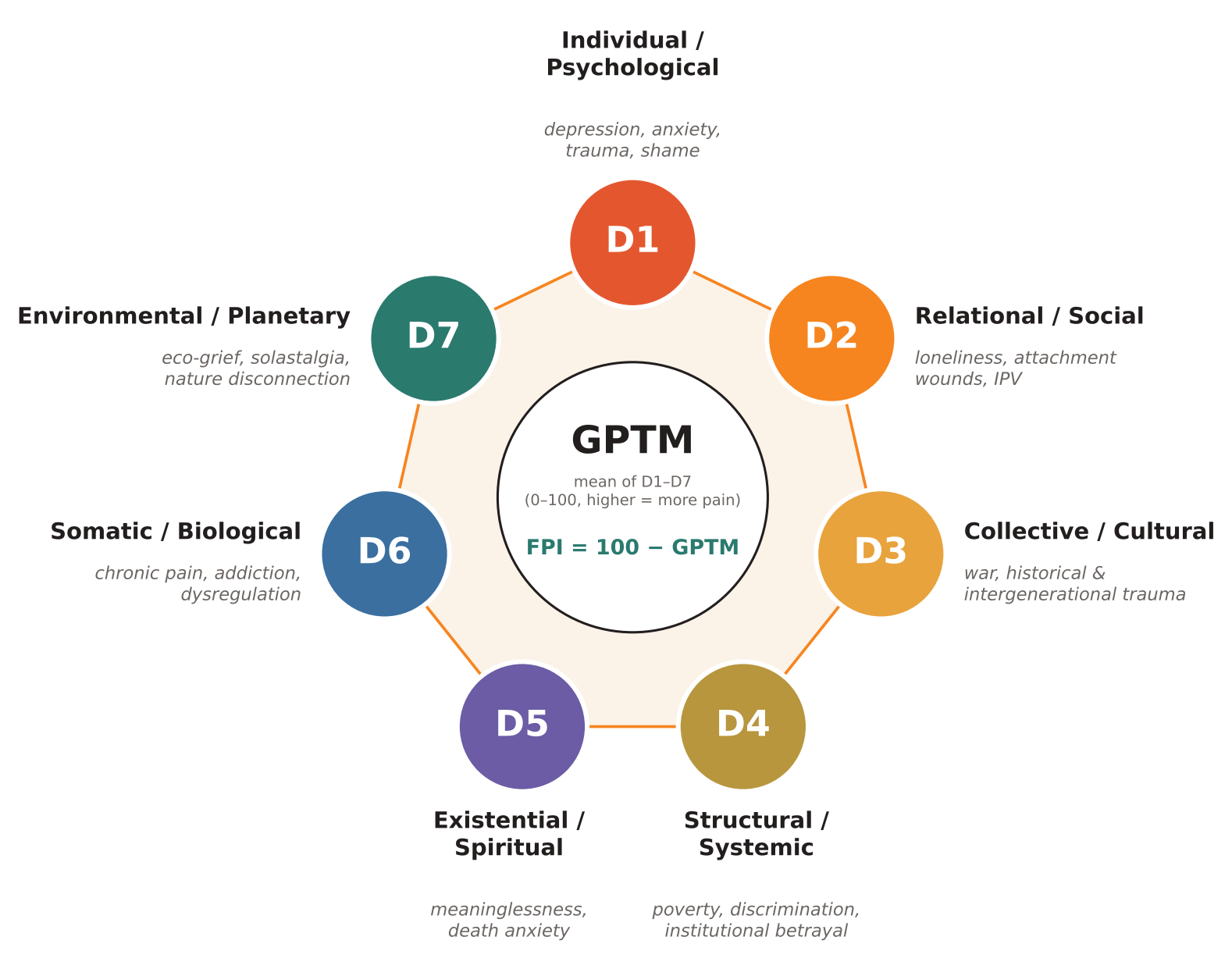
The evidence above organises naturally into seven domains, which form the axes of the GPTM (Figure 1). The domains are distinguished by the primary locus of suffering—mind, relationship, group, institution, meaning, body or planet—not by the type of event, so that one event (a war, for example) may generate pain in several domains at once.
Figure 1. The seven domains of the Global Pain and Trauma Map. Each place is scored 0–100 on each domain; the GPTM composite is the mean of D1–D7, and the Fundamental Peace Index is FPI = 100 − GPTM.
4.1 D1 — Individual/Psychological
Internal distress arising from thoughts, emotions, memories and self-perception: diagnosable disorders (depression, anxiety, PTSD, obsessive-compulsive, eating and psychotic disorders), unprocessed traumatic memory, shame and guilt, and what Jung called the shadow—disowned aspects of the self that drive behaviour through projection and reactivity (American Psychiatric Association, 2013; Jung, 1959; van der Kolk, 2014).
4.2 D2 — Relational/Social
Suffering arising from disrupted attachment, belonging and connection: insecure and disorganised attachment (Ainsworth et al., 1978; Bowlby, 1988; Liotti, 2004); intimate partner and family violence (Campbell, 2002); betrayal and abandonment (Freyd, 1996); bullying and exclusion; and loneliness and social isolation (Cacioppo & Patrick, 2008; Holt-Lunstad et al., 2015).
4.3 D3 — Collective/Cultural
Wounds carried by groups: collective trauma from war, genocide, disaster and pandemic (Hirschberger, 2018); intergenerational and historical trauma, including the ongoing effects of colonisation on Indigenous peoples (Brave Heart, 2003; Brave Heart & DeBruyn, 1998; Whitbeck et al., 2004); cultural trauma that shatters collective identity (Alexander, 2004); and moral injury (Litz et al., 2009; Shay, 1994). In the United States, for example, the suicide rate among American Indian and Alaska Native people is the highest of any racial or ethnic group, about 1.7 times the national rate in 2023 (Stone et al., 2025).
4.4 D4 — Structural/Systemic
Harm embedded in economic, legal and political structures: poverty and inequality (Lund et al., 2018); discrimination and its chronic stress (Williams & Mohammed, 2013); structural violence (Farmer, 2004; Galtung, 1969); institutional betrayal (Smith & Freyd, 2014); and the harms of mass incarceration and adversarial justice systems (Alexander, 2010; Herman, 2005).
4.5 D5 — Existential/Spiritual
Suffering from confronting the ultimate concerns of existence—death, meaninglessness, isolation and freedom (Yalom, 1980)—and from disconnection from meaning, purpose and the sacred: existential vacuum (Frankl, 1959), spiritual crisis or "spiritual emergency" (Grof & Grof, 1989; Lukoff, 1985), the loss of transcendent frames in secular societies (Taylor, 2007) and death anxiety (Becker, 1973).
4.6 D6 — Somatic/Biological
Suffering lived in the body: chronic pain, which affects about one adult in five (Goldberg & McGee, 2011)—low back pain alone affected some 619 million people in 2020 (Ferreira et al., 2023); trauma held in sensorimotor and autonomic patterns (Levine, 1997; Ogden et al., 2006); chronic illness and its losses of identity and role (Charmaz, 1983); and addiction, often an attempt to regulate pain or emptiness (Maté, 2008; Volkow et al., 2016). Pain and suffering are related but distinct: suffering arises when pain threatens the integrity of the person (Cassell, 1982).
4.7 D7 — Environmental/Planetary
Suffering arising from our relationship with the natural world: climate anxiety and ecological grief (Cunsolo & Ellis, 2018; Hickman et al., 2021), solastalgia (Albrecht, 2019), disconnection from nature (Louv, 2005) and planetary-scale existential dread (Scranton, 2015), which can turn into despair or into committed action (Macy & Johnstone, 2012).
4.8 The full GPTM matrix
The preprint presented three domains in detail and promised the rest as a supplement. Table 1 gives all seven in a common format. Mechanisms are listed as proposed pathways drawn from the cited literature; the indicators show the kinds of data that inform each domain score on the platform.
Table 1. The Global Pain and Trauma Map: seven domains, proposed mechanisms, indicators, Shadow-Gift-Essence (S-G-E) triads and graded intervention pathways.
| Domain | Manifestations · proposed mechanisms · example indicators | S-G-E triad (shadow → gift → essence) | Interventions (evidence grade) · main scale |
|---|---|---|---|
| D1 Individual/Psychological | Depression, anxiety, PTSD, shame, guilt, disowned parts. Mechanisms: Threat-system sensitisation; default mode network (DMN) rumination; HPA-axis dysregulation. Indicators: GBD prevalence and DALYs; suicide rates; Gallup negative-affect items. | Hopelessness, fear, worthlessness → depth, discernment, humility → peace, self-compassion | CBT, EMDR, MBCT (A); clinical hypnosis for anxiety (A–B); IFS (C); S-G-E practice (D). Scale: Individual. |
| D2 Relational/Social | Loneliness, insecure attachment, intimate partner violence, bullying, betrayal. Mechanisms: Disrupted co-regulation; chronic social threat. Indicators: Loneliness and social-support items; IPV prevalence. | Isolation, mistrust → longing for connection → belonging, secure love | Group and social-connection programmes (B); IPV prevention (B); couple and family therapy (A–B). Scale: Individual, community. |
| D3 Collective/Cultural | War trauma, historical and intergenerational trauma, cultural loss, moral injury. Mechanisms: Transmission through parenting, narrative, community dysregulation; possible epigenetic pathways. Indicators: Conflict events and deaths (e.g., ACLED); displacement; historical-trauma markers. | Collective grief, rage, victimhood → resilience, solidarity, memory → reconciliation, cultural renewal | Community trauma-informed programmes (B–C); truth and reconciliation processes (C); healing circles and rituals (C). Scale: Community, institutional. |
| D4 Structural/Systemic | Poverty, inequality, discrimination, institutional betrayal, incarceration. Mechanisms: Chronic stress of deprivation and discrimination; loss of agency. Indicators: Extreme-poverty rate; inequality; governance and corruption indices. | Powerlessness, resentment → justice-seeking → dignity, shared prosperity | Cash transfers and social protection (A–B for mental health); Housing First (A for housing stability; C for mental health); anti-discrimination policy (C). Scale: Institutional, societal. |
| D5 Existential/Spiritual | Meaninglessness, death anxiety, spiritual crisis, disconnection from the sacred. Mechanisms: Mortality salience; self-referential rigidity. Indicators: Meaning-in-life and purpose items; flourishing surveys. | Dread, emptiness → depth, authenticity → meaning, acceptance, connection | Meaning-centred psychotherapy (B); psilocybin-assisted therapy for cancer-related distress (B); contemplative practice (B). Scale: Individual, community. |
| D6 Somatic/Biological | Chronic pain, addiction, autonomic dysregulation, burnout, chronic illness. Mechanisms: Central sensitisation; reward-system adaptation; autonomic imbalance. Indicators: Chronic-pain and substance-use burden; healthy life expectancy. | Contraction, craving → body wisdom, vitality → embodied ease | Yoga (B); mindfulness-based pain programmes (B); hypnosis for psychosomatic conditions (B); somatic therapies (C). Scale: Individual, community. |
| D7 Environmental/Planetary | Climate anxiety, eco-grief, solastalgia, nature disconnection. Mechanisms: Anticipatory threat; loss of place attachment. Indicators: Climate-anxiety surveys; climate vulnerability (e.g., ND-GAIN); air and green-space indicators. | Dread, despair → care, stewardship → interbeing, active hope | Nature-based interventions (B); climate-emotion groups (C); collective climate action (C). Scale: Community, planetary. |
5. The Architecture of the Shadow
The GPTM describes where suffering concentrates. The shadow-to-peace model describes how suffering is held within persons and groups, and how it can change. It integrates five strands.
5.1 Jung: the shadow
Jung (1959, 1968) described the shadow as the aspects of the self that have been repressed or disowned because family or culture deemed them unacceptable. The shadow contains destructive impulses and also suppressed potentials—assertiveness, creativity, tenderness—and it acts unconsciously, through projection, reactivity and self-sabotage. Wholeness requires bringing it into awareness so that it can be integrated rather than acted out.
5.2 Internal Family Systems: parts and Self
Internal Family Systems (IFS) therapy treats the psyche as naturally multiple (Schwartz, 1995, 2013). Exiles carry the pain of past injury; managers try to prevent that pain from surfacing; firefighters act to extinguish it when it does—through substances, bingeing, dissociation or rage. Healing occurs when the Self, characterised by curiosity, calm and compassion, leads the system, unburdening exiles and allowing protectors to relax. The evidence base for IFS is growing but still preliminary.
5.3 Trauma and fragmentation
Trauma overwhelms integrative capacity, leaving experience stored in implicit, sensorimotor and emotional systems without a coherent narrative (van der Kolk, 2014; van der Kolk et al., 1996). The results include dissociation (Nijenhuis & van der Hart, 2011), oscillation between intrusion and avoidance (Horowitz, 1986), alternation between hyper- and hypoarousal, and the loss of a coherent life story (Herman, 1992). Healing requires conditions of safety in which fragments can be brought into awareness and integrated.
5.4 Polyvagal theory: safety and threat
Polyvagal theory describes a hierarchy of autonomic states—ventral vagal social engagement, sympathetic mobilisation and dorsal vagal shutdown—and frames trauma as the loss of access to felt safety (Porges, 2011, 2017; Dana, 2018). Several of its neuroanatomical and evolutionary claims are contested, but its clinical emphasis on safety, attunement and co-regulation is consistent with wider trauma research. We use it here as a clinical model, not as settled physiology.
5.5 Hawkins' Map of Consciousness as a heuristic
Hawkins (1995, 2012) ordered human states on a scale from shame and guilt at the bottom, through fear, desire, anger and pride, to courage, acceptance, love, joy and peace. The ordering has intuitive appeal and parallels other developmental models: contracted, self-protective states at the lower end; open, connected states at the upper end. Courage marks the turning point at which a person begins to take responsibility for their experience.
We use the map only in this ordinal, heuristic sense. Hawkins' numerical "calibrations" (for example, shame = 20, peace = 600) were derived from applied-kinesiology muscle testing. Controlled studies have found that this method performs no better than chance (Kenney et al., 1988; Schwartz et al., 2014). The numbers therefore have no measurement validity, and the claims built on them—including the logarithmic "counterbalancing" of populations by highly conscious individuals—have no empirical support. This version removes those claims and does not recommend muscle testing in any form. The ordering may still serve as a shared language for the direction of change, from contraction toward openness.
5.6 The Shadow-Gift-Essence framework
The Shadow-Gift-Essence (S-G-E) framework integrates these strands into a practical process (Gallardo, 2025b):
- Shadow: the difficult, disowned or painful emotion or part—fear, anger, shame, grief.
- Gift: the protective intention or adaptive capacity within it. Fear seeks safety; anger defends boundaries; shame seeks belonging; grief honours what was loved.
- Essence: the integrated quality that emerges when the shadow is acknowledged and the gift claimed—peace, trust, love, freedom.
The process has three steps: recognise and name the shadow without judgement; ask for the gift ("what are you protecting? what do you need?"); and embody the essence, anchoring it in a word, image, gesture or breath. S-G-E draws on evidence-based elements of IFS, Focusing, Gestalt and emotion-focused therapy (Gendlin, 1978; Greenberg, 2015; Perls, 1969; Schwartz, 2013), but as a distinct protocol it has not yet been evaluated in controlled studies (evidence grade D). The Meta Pets system externalises the same triads as symbolic animals for playful, imaginal work, particularly with children (Gallardo, 2025a); it is likewise a practice-based proposal awaiting evaluation.
6. The GPTM Metric and the Fundamental Peace Index
6.1 Scoring
Each place p (a country, city, community or village) receives a score from 0 to 100 on each of the seven domains, where 0 indicates no discernible suffering in that domain and 100 the most severe documented levels:
- Domain score: Dk(p) ∈ [0, 100], for k = 1…7.
- GPTM composite: GPTM(p) = round[(D1 + D2 + … + D7) / 7], an unweighted mean.
- Fundamental Peace Index: FPI(p) = 100 − GPTM(p).
The equal weighting is deliberate: it encodes the framework's central claim that no domain of suffering is privileged over another, and that peace requires attention to all seven. Because the composite is compensatory, two places with the same GPTM can have very different profiles; the seven-domain profile, not the composite alone, should guide action.
The FPI expresses the same information as distance from suffering. It is defined as "proximity to Fundamental Peace": not merely the absence of conflict but the presence of well-being across all seven domains. Four interpretive bands are used (Table 2).
Table 2. Fundamental Peace Index bands.
| FPI | GPTM composite | Band | Interpretation |
|---|---|---|---|
| 0–30 | 70–100 | Crisis | Acute or protracted suffering in most domains; conflict, collapse or severe deprivation |
| 31–50 | 50–69 | Emerging | Suffering high in several domains; some protective resources active |
| 51–70 | 30–49 | Developing | Most domains moderate; clear strengths in relational, existential or ecological life |
| 71–100 | 0–29 | Fundamental Peace | Low suffering across all seven domains; flourishing conditions present |
The bands are interpretive conventions, not empirically derived cut-offs. Earlier versions associated them with Hawkins' levels; that correspondence is withdrawn (Section 5.5).
6.2 How domain scores are assigned in version 4.9
In platform version 4.9, domain scores are expert-rated estimates assigned by the author's team. They are informed by WHO GBD data, Gallup World Poll emotional indicators, ACLED conflict data, World Bank poverty and governance indicators, and climate-emotion surveys, interpreted through the seven-domain framework. No formal transformation from source indicators to domain scores has yet been published, and individual ratings are not yet independently replicated.
6.3 What the version 4.9 dataset shows
Table 3 and Figures 2–4 summarise the dataset.
Table 3. Descriptive statistics of GPTM v4.9 domain scores across 196 countries.
| Domain | Mean | SD | Range |
|---|---|---|---|
| D1 Individual/Psychological | 61.4 | 10.1 | 45–92 |
| D2 Relational/Social | 59.6 | 9.9 | 42–88 |
| D3 Collective/Cultural | 58.2 | 15.2 | 28–95 |
| D4 Structural/Systemic | 66.1 | 16.5 | 28–95 |
| D5 Existential/Spiritual | 46.4 | 9.9 | 30–75 |
| D6 Somatic/Biological | 59.7 | 10.5 | 42–88 |
| D7 Environmental/Planetary | 62.3 | 6.6 | 50–82 |
| GPTM composite | 59.1 | 8.8 | 42–84 |
| FPI (100 − GPTM) | 40.9 | 8.8 | 16–58 |
Across countries, the mean composite was 59.1 (median 58), equivalent to an FPI of 40.9. Twenty-four countries fell in the crisis band, 146 in the emerging band and 26 in the developing band; none reached FPI 60, and none the Fundamental Peace band. The highest composites (most suffering) were assigned to countries in protracted conflict—Syria, Yemen, Afghanistan, South Sudan and Lebanon—and the lowest to small, wealthy or contemplative societies, including Liechtenstein, Bhutan, Monaco, San Marino and Andorra.
The 321 communities scored lower on average (mean composite 48.4, SD 11.7) and more widely: 168 in the developing band and ten in the Fundamental Peace band, mostly intentional, contemplative and Indigenous communities (Figure 2). This partly reflects selection—many communities were mapped because they are known for well-being—and should not be read as representative.
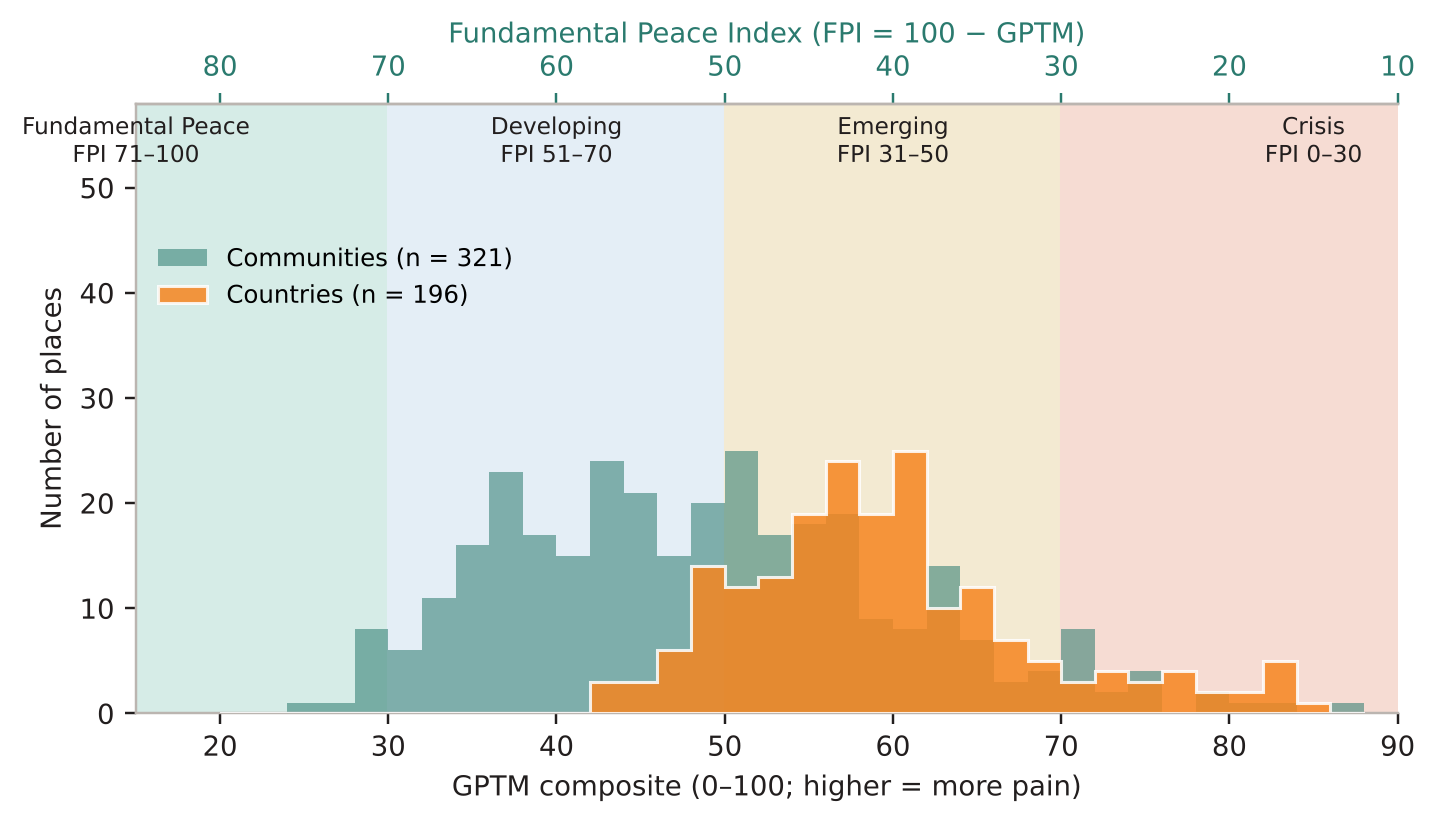
Figure 2. Distribution of GPTM composite scores (bottom axis) and FPI (top axis) for 196 countries and 321 communities in GPTM v4.9, with the four FPI bands.
Domain profiles differ more than composites (Figure 3). Structural suffering (D4) had the highest mean and the widest spread, peaking in Africa (regional mean 78). Existential suffering (D5) had the lowest mean, and was lowest in Oceania (36) and Africa (40)—regions with high structural suffering—while Europe combined the lowest structural scores (48) with comparatively high existential (55) and environmental (60) scores. Across countries, D4 and D5 were weakly negatively correlated (r = −0.29). If confirmed by measured data, this pattern would support the framework's central contention: material security and meaning are different goods, and single-index rankings can hide one behind the other.
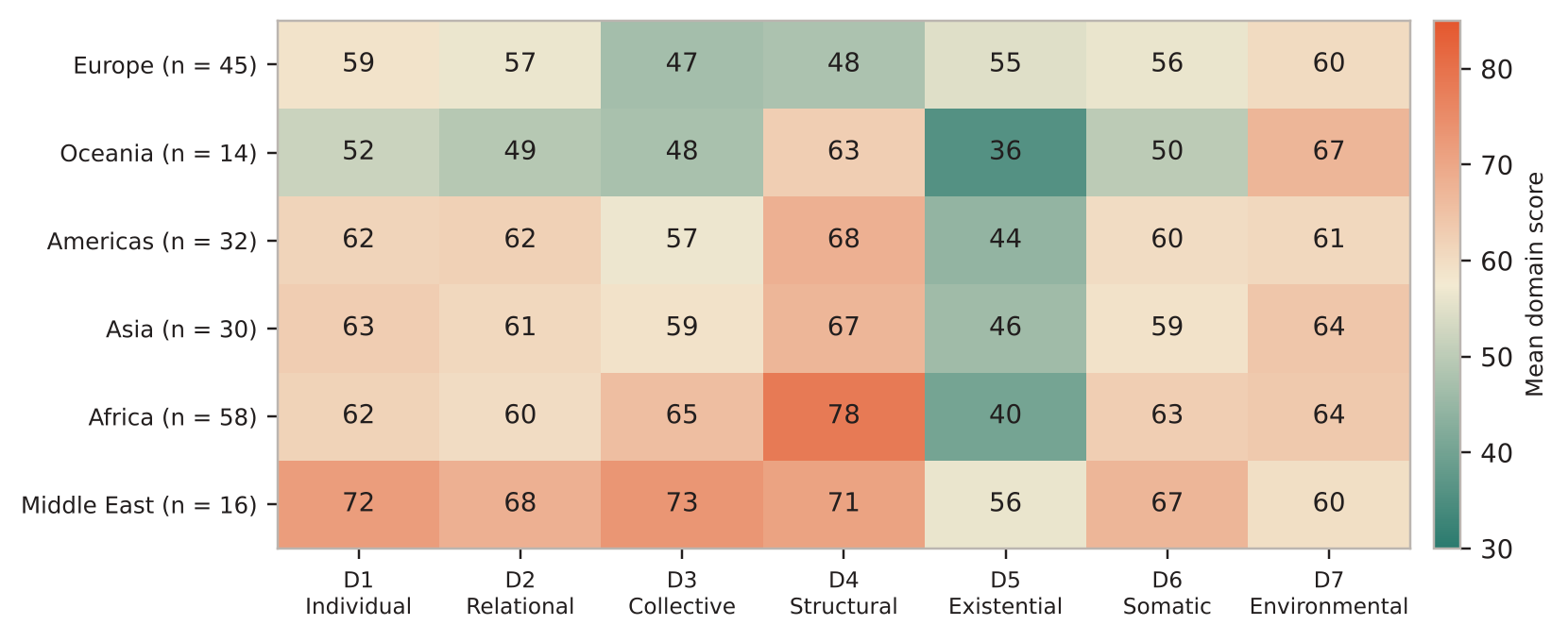
Figure 3. Mean domain scores by region, GPTM v4.9 (one country coded "Eurasia" is omitted). Higher scores indicate more suffering.
6.4 What the dataset cannot yet show
Three features of the dataset limit what it can support.
First, the scores are judgements, not measurements. They are anchored in published data, but the step from data to score is not yet codified, so the scores cannot be reproduced by an independent team.
Second, the correlation matrix (Figure 4) points to strong rater halo. D1, D2 and D6 correlate between 0.91 and 0.95 across countries—far higher than the correlations between measured depression, loneliness and chronic-pain prevalence in population data. Internal consistency across domains (Cronbach's α = 0.87) is therefore not evidence of a coherent construct; it more likely reflects a general impression of each country's condition. D7 is nearly independent of the other domains (r ≤ 0.27), which may be accurate—climate exposure and climate distress follow geography more than wealth—or may reflect a different rating logic.
Third, the platform's narrative panels include further indicative statements—for example correlations with other indices and monetary equivalents—that were not computed from published data and are not reproduced in this article.
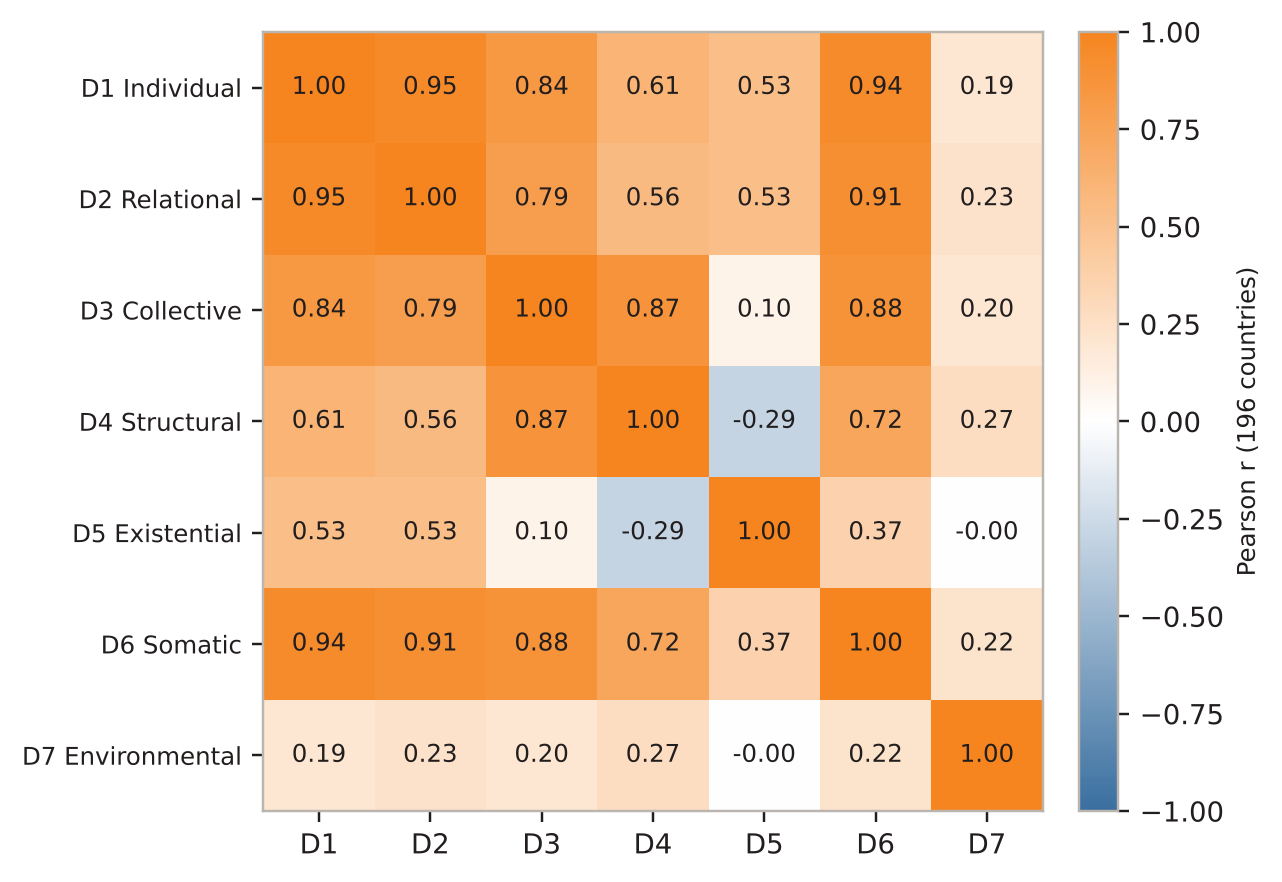
Figure 4. Pearson correlations between GPTM domain scores across 196 countries (v4.9). Very high correlations among D1, D2 and D6 suggest rater halo rather than empirical co-variation.
For these reasons the GPTM v4.9 scores should be used to orient attention, to start conversations about neglected domains and to generate hypotheses—not to rank countries, allocate resources or evaluate programmes. Section 10 sets out how this can change.
6.5 The GPTM Village Profile (GPTM-V)
Community programmes need a version of the map that can be applied locally and repeatedly. The GPTM Village Profile (GPTM-V, version 1.0) applies the same formula to structured key-informant ratings. In each village, a panel of six to eight informants—for example a local leader, a community health worker, a teacher, women and men from the main occupational group, an elder and a young person—each rate three indicators per domain on a 0–4 scale ("how much of a problem is this here?") and name what or who helps in each domain. Each domain score is the panel mean multiplied by 25 (0–100); GPTM-V is the mean of the seven domains; and FPI-V = 100 − GPTM-V. A closing question asks what would make the village a "Village of Happiness".
The instrument is designed to protect informants: no one is asked about personal experience, and no names, caste, religion or income are recorded. A safeguarding protocol applies if an informant describes current harm to a specific person. Planned validation includes inter-rater agreement within villages and convergence with household well-being and distress measures (WHO-5, GAD-7, PERMA-Profiler) aggregated to village level. GPTM-V will be used only after ethics approval for the relevant study.
7. From Shadow to Fundamental Peace: Intervention Pathways
This section summarises intervention families that can move people and communities from shadow toward peace, with evidence grades. It does not replace clinical guidelines.
7.1 Psychological therapies (D1–D2)
Cognitive-behavioural therapy and EMDR have the strongest evidence for depression, anxiety and PTSD (grade A). Couple, family and attachment-based therapies address relational suffering (A–B). IFS and other parts-based approaches have promising early trials (C). The S-G-E process can be used within any of these as a common language for working with difficult emotions (D).
7.2 Clinical hypnosis and altered states (D1, D5, D6)
Hypnosis is the author's principal clinical focus (Gallardo & Chetri, 2026). Meta-analyses support it as an adjunct or stand-alone treatment for anxiety (d = 0.79 at end of treatment, rising to 0.99 at follow-up; Valentine et al., 2019) and show effects for depression comparable to other psychological treatments (Milling et al., 2019). A meta-analysis of 21 trials found benefit for psychosomatic disorders (Flammer & Alladin, 2007), and gut-directed hypnotherapy is an established option for refractory irritable bowel syndrome (Whorwell et al., 1984). An umbrella review supports clinical hypnosis across a range of conditions (Rosendahl et al., 2024) (overall grade A–B). Neuroimaging shows that hypnosis in highly hypnotisable people reduces dorsal anterior cingulate activity, increases connectivity between the dorsolateral prefrontal cortex (DLPFC) and the insula, and reduces DLPFC connectivity with default mode regions (Jiang et al., 2017)—a pattern consistent with regulation without effortful suppression. Hypnotic age-regression for trauma requires careful pacing, trained clinicians and attention to the risk of memory distortion.
Psychedelic-assisted therapy is a separate, regulated field. Psilocybin produced large and sustained reductions in depression and anxiety in patients with life-threatening cancer (Griffiths et al., 2016; Ross et al., 2016) (grade B for this indication). In August 2024 the US Food and Drug Administration declined to approve MDMA-assisted therapy for PTSD and requested an additional phase 3 trial. These treatments should be used only within approved research or clinical frameworks.
7.3 Contemplative practices (D1, D5, D6)
Mindfulness-based interventions outperform no treatment (d = 0.55) and minimal or non-specific active controls, and are equivalent to established evidence-based treatments for psychiatric disorders (Goldberg et al., 2018) (grade A). Loving-kindness and compassion meditation increase positive emotion and reduce self-criticism (Hofmann et al., 2011) (B). Yoga shows moderate short-term benefit for depression compared with usual care (Cramer et al., 2013) and is best regarded as an ancillary option (B). Slow breathing practices reduce physiological arousal (Brown & Gerbarg, 2012) (B–C). Long-term meditation is associated with reduced DMN activity (Brewer et al., 2011) and with structural and functional changes in attention and emotion networks (Tang et al., 2015).
Hawkins' practice of "letting go"—allowing an emotion to be felt fully without resistance until its charge subsides (Hawkins, 2012)—resembles acceptance-based techniques with good support and may be used in that spirit (grade D as a distinct method).
7.4 Community and collective healing (D2–D3)
Trauma-informed organisations apply six principles: safety; trustworthiness and transparency; peer support; collaboration; empowerment; and attention to cultural, historical and gender issues (Substance Abuse and Mental Health Services Administration [SAMHSA], 2014) (B–C). Healing circles and culturally grounded practices support Indigenous and post-conflict communities (Gone, 2013) (C). Truth and reconciliation processes have mixed outcomes; they are most helpful when combined with reparations, institutional reform and continued dialogue (Hayner, 2011) (C). Collective rituals create shared meaning and strengthen bonds (Turner, 1969) (C).
7.5 Structural and policy action (D4, D7)
Structural suffering requires structural responses: universal mental health coverage integrated into primary care; social protection, including cash transfers; Housing First; anti-discrimination enforcement; trauma-informed schools, courts and child welfare; restorative justice; and climate action and support for Indigenous land stewardship. The WHO Comprehensive Mental Health Action Plan 2013–2030 provides the global policy frame (WHO, 2013).
8. Fundamental Peace as the Target State
8.1 Definition
Fundamental Peace (FP) is the target toward which these pathways aim. Gallardo and Chetri (2026) define it as integrated regulatory capacity under changing conditions, with four components:
- Flexible attentional control without effortful suppression.
- Emotional coherence across self-states: continuity of self even as emotions change, without dissociation.
- Reduced self-referential rigidity: freedom from ruminative loops and fixed self-concepts.
- Compassionate self-awareness: observing one's own experience with genuine kindness.
FP is distinct from equanimity (affective neutrality), from flow (absorption tied to activity) and from life satisfaction (an evaluative judgement). It is conceived as a trait-like capacity that can be cultivated, not a rare peak state, and it is expressed in many traditions—Buddhist samādhi and mettā, the yogic sat-chit-ānanda, Christian contemplative "peace that surpasses understanding", Indigenous harmony with land and ancestors, and secular models of integration and Self-leadership.
8.2 Neurobiological hypotheses
On current evidence, FP is hypothesised to involve reduced DMN dominance with preserved adaptive self-reflection (Brewer et al., 2011); efficient executive control and salience-network coupling (Jiang et al., 2017; Posner & Rothbart, 2007); balanced interoceptive processing in the insula (Craig, 2009); high vagally mediated heart rate variability; and EEG patterns seen in experienced meditators (Lutz et al., 2004, 2015). These are testable predictions, not established findings.
8.3 Measurement
The Fundamental Peace Scale (FP20), a 20-item self-report measure of the four components, is now in pre-registered joint validation with the Shame and Release Scale (SRS) in Indian organisational and artisan populations (Gallardo, 2026b). The GPTM and the FP20 are complementary: the first maps the conditions of suffering in a place, the second the capacity for peace in a person. One aim of the research programme is to test whether improvements in place-level FPI and person-level FP20 move together.
9. Implementation: From the Individual to the Planetary
Suffering is multi-level, so the response must be too. Table 4 summarises a five-level implementation frame. The levels are mutually reinforcing: individual healing builds capacity for community engagement; community healing builds momentum for institutional reform; reform changes the conditions in which individuals live.
Table 4. Implementation framework across levels.
| Level | Primary GPTM domains | Example actions | Example metrics |
|---|---|---|---|
| Individual | D1, D5, D6 | Accessible psychotherapy; clinical hypnosis; contemplative practice; S-G-E self-practice; peer support | PHQ-9, GAD-7, WHO-5; FP20; SRS |
| Community | D2, D3 | Healing circles; cultural revitalisation; trained lay facilitators; social-connection programmes | GPTM-V and FPI-V; social cohesion; loneliness prevalence |
| Institutional | D1, D2, D4 | Trauma-informed schools, workplaces, health and justice systems; shame-free culture programmes; psychological safety | Staff well-being and burnout; psychological safety; culture pulse surveys |
| Societal | D3, D4 | Universal mental health coverage; social protection; anti-discrimination; restorative justice; well-being budgeting | Population mental health; poverty and inequality; health equity |
| Planetary | D5, D7 | WHO Mental Health Action Plan; climate action; Indigenous land rights; well-being beyond GDP (Happytalism; Gallardo, 2021) | National GPTM and FPI; climate vulnerability; flourishing surveys |
Universities, health systems, schools, faith communities, businesses, governments and civil society each have a role. The World Happiness Foundation's Villages of Happiness and Shameless Institutions programmes are early tests of the community and institutional levels: they apply GPTM-V alongside validated well-being measures and evaluate change over time.
10. Research Agenda
Ten priority questions follow from this review. The first two concern the GPTM itself.
- Can GPTM scoring be made transparent and reproducible? Publish an indicator-to-domain codebook with explicit transformations and weights, have independent rater teams re-score a stratified sample of countries, and report inter-rater reliability.
- Is the seven-domain structure valid? Test convergence of domain scores with measured population data (e.g., GBD prevalence, Gallup emotion items, loneliness and meaning surveys), examine discriminant validity once halo is removed, and test sensitivity to alternative aggregation (geometric means, data-driven weights).
- Is GPTM-V reliable and valid at village level? Inter-rater agreement within villages; convergence with aggregated household measures; sensitivity to change.
- Is the FP20 a valid measure of Fundamental Peace? Factor structure, invariance across groups and convergence, as set out in the pre-registered protocol (Gallardo, 2026b).
- What are the neural and physiological signatures of FP? fMRI, EEG and heart rate variability comparisons of high- and low-FP individuals, and longitudinal change.
- Are integrative protocols effective? RCTs of S-G-E-informed hypnotherapy and Meta Pets against active controls for defined populations, with dismantling designs.
- How does shadow integration work? Mediation analyses of shame release, self-compassion and emotion regulation within trials.
- What heals collective and intergenerational trauma? Community-based participatory evaluations of healing and reconciliation programmes.
- What do structural interventions do for D1, D2 and D5? Natural experiments and quasi-experimental studies of social protection, housing and anti-discrimination policy on mental health and meaning.
- How can effective practices reach billions? Implementation science on task-sharing, digital delivery and cost-effectiveness for the lowest-cost, widest-reach practices.
11. Limitations
This review has several limitations. It is a narrative, not a systematic, review, and its selection of literature reflects the author's integrative perspective. Several components of the framework—S-G-E, Meta Pets and the Integrative Transformation Model—are the author's own and have not yet been tested in controlled trials; the author therefore has an intellectual interest in their success. The GPTM v4.9 scores are expert estimates with evident halo, the community sample is purposive, and no formal sensitivity or uncertainty analysis has been carried out. The equal weighting of domains is a normative choice. Cross-cultural validity—particularly for D5, whose meaning differs across religious and secular contexts—remains to be established. Finally, epidemiological figures come from different sources, years and methods and should be read as orders of magnitude.
12. Conclusion
Human suffering is vast, multi-dimensional and unevenly seen. The GPTM offers one way to see more of it at once: seven domains, a simple composite and its inverse, the Fundamental Peace Index. Its present value is as a shared map and a set of testable claims—that suffering in one domain can coexist with flourishing in another, that structural security does not by itself bring meaning, and that lasting peace requires attention to all seven domains together.
The path from shadow to Fundamental Peace runs through approaches with strong evidence (psychological therapy, clinical hypnosis, mindfulness, social protection) and through promising practices that still need testing. The next step is not to claim more for the map, but to measure better: transparent scoring, independent raters, village-level instruments and validated person-level scales. If that work succeeds, the FPI could become what it is meant to be—an honest, actionable measure of how close a community is to peace.
Editorial Note: Revisions from the Preprint
The following changes were made between the preprint (Gallardo, 2026a) and this version of record:
- Epidemiology corrected. Figures from different GBD rounds are no longer mixed. A PTSD prevalence of "71.3 million (0.9%)" attributed to the GBD was removed: GBD does not model PTSD separately. Trauma-exposure and PTSD figures are now attributed to Benjet et al. (2016) and Koenen et al. (2017). ACE figures now distinguish the 1998 paper from the full cohort. The COVID-19 orphanhood estimate is now cited to Hillis et al. (2022). The "18 million poverty deaths" estimate (Pogge's, not Farmer's) was removed as outdated. Untraceable claims ("1.5 billion with chronic pain"; "75% of burden, 10% of resources") were replaced with sourced figures. Violence-against-women, loneliness and poverty figures were updated to the 2025 WHO and World Bank releases.
- Effect sizes re-attributed. Disorder-specific hypnosis effect sizes previously credited to Flammer and Alladin (2007), a meta-analysis of psychosomatic disorders, are now cited to the correct meta-analyses. The unsupported PTSD effect size (d = 1.10) was removed. The mindfulness and yoga findings are now reported against the right comparators.
- Hawkins' map reframed. Hawkins' map is now used as an ordinal heuristic only. Numerical calibrations of persons and nations, the "counterbalancing" claim and the recommendation to use muscle testing were removed.
- GPTM specified. Added the full seven-domain table (Table 1), the scoring formulas and FPI bands, a descriptive analysis of the v4.9 dataset with its limitations, and the GPTM Village Profile.
- Added sections. Evidence grades, a limitations section, declarations and a data availability statement were added. The research agenda now begins with GPTM validation.
Declarations
Author contributions. L.M.G. conceived the framework, wrote the original preprint, directed the revision and approved the final version.
Funding. No specific funding was received for this work.
Conflict of interest. The author is the founder of the World Happiness Foundation, which publishes this Journal, and is the Journal's Editor-in-Chief. He developed the GPTM, the FPI, the S-G-E framework, the Meta Pets system and the FP20, all discussed in this article.
Peer review. This article was peer-reviewed by at least three members of the Journal's Editorial Board (internal peer review; the reviewers were not external to the Journal). Revision for this version also included verification of every statistic and reference against its primary source and a re-analysis of the GPTM dataset. Because the author is the Journal's Editor-in-Chief, readers should weigh the review process with this relationship in mind.
Use of AI tools. AI assistance (Claude, Anthropic) was used during revision to check statistics and references against primary sources, to compute the descriptive statistics, to draw the figures and to edit the language. The author reviewed all changes and takes full responsibility for the content.
Ethics. This review involved no human participants or personal data. GPTM-V and the FP20 will be used in field research only after ethics approval.
Data availability. The GPTM v4.9 scores are openly available on the interactive platform (World Happiness Foundation, 2026). The extracted dataset and the analysis script used for Section 6 are available from the author on request and will be deposited with the GPTM codebook.
Preprint. An earlier version was posted at Preprints.org on 7 April 2026 (https://doi.org/10.20944/preprints202604.0409.v1).
References
- Ainsworth, M. D. S., Blehar, M. C., Waters, E., & Wall, S. (1978). Patterns of attachment: A psychological study of the strange situation. Lawrence Erlbaum.
- Albrecht, G. (2019). Earth emotions: New words for a new world. Cornell University Press.
- Alexander, J. C. (2004). Toward a theory of cultural trauma. In J. C. Alexander, R. Eyerman, B. Giesen, N. J. Smelser, & P. Sztompka (Eds.), Cultural trauma and collective identity (pp. 1–30). University of California Press.
- Alexander, M. (2010). The new Jim Crow: Mass incarceration in the age of colorblindness. The New Press.
- American Psychiatric Association. (2013). Diagnostic and statistical manual of mental disorders (5th ed.). American Psychiatric Publishing.
- Becker, E. (1973). The denial of death. Free Press.
- Benjet, C., Bromet, E., Karam, E. G., Kessler, R. C., McLaughlin, K. A., Ruscio, A. M., et al. (2016). The epidemiology of traumatic event exposure worldwide: Results from the World Mental Health Survey Consortium. Psychological Medicine, 46(2), 327–343. https://doi.org/10.1017/S0033291715001981
- Bowlby, J. (1988). A secure base: Parent-child attachment and healthy human development. Basic Books.
- Brave Heart, M. Y. H., & DeBruyn, L. M. (1998). The American Indian Holocaust: Healing historical unresolved grief. American Indian and Alaska Native Mental Health Research, 8(2), 56–78.
- Brave Heart, M. Y. H. (2003). The historical trauma response among natives and its relationship with substance abuse: A Lakota illustration. Journal of Psychoactive Drugs, 35(1), 7–13.
- Brewer, J. A., Worhunsky, P. D., Gray, J. R., Tang, Y. Y., Weber, J., & Kober, H. (2011). Meditation experience is associated with differences in default mode network activity and connectivity. Proceedings of the National Academy of Sciences, 108(50), 20254–20259. https://doi.org/10.1073/pnas.1112029108
- Brown, B. (2006). Shame resilience theory: A grounded theory study on women and shame. Families in Society, 87(1), 43–52.
- Brown, R. P., & Gerbarg, P. L. (2012). The healing power of the breath. Shambhala.
- Cacioppo, J. T., & Patrick, W. (2008). Loneliness: Human nature and the need for social connection. W. W. Norton.
- Campbell, J. C. (2002). Health consequences of intimate partner violence. The Lancet, 359(9314), 1331–1336.
- Cassell, E. J. (1982). The nature of suffering and the goals of medicine. New England Journal of Medicine, 306(11), 639–645.
- Centers for Disease Control and Prevention. (2024). About the CDC-Kaiser ACE Study. CDC.
- Charlson, F., van Ommeren, M., Flaxman, A., Cornett, J., Whiteford, H., & Saxena, S. (2019). New WHO prevalence estimates of mental disorders in conflict settings: A systematic review and meta-analysis. The Lancet, 394(10194), 240–248. https://doi.org/10.1016/S0140-6736(19)30934-1
- Charmaz, K. (1983). Loss of self: A fundamental form of suffering in the chronically ill. Sociology of Health & Illness, 5(2), 168–195.
- Cowden, R. G., Chen, Z. J., Wilkinson, R., Weziak-Bialowolska, D., Breedlove, T., Gundersen, C., et al. (2025). Childhood predictors of suffering in adulthood across 22 countries. Communications Medicine. https://doi.org/10.1038/s43856-025-00913-8
- Craig, A. D. (2009). How do you feel—now? The anterior insula and human awareness. Nature Reviews Neuroscience, 10(1), 59–70.
- Cramer, H., Lauche, R., Langhorst, J., & Dobos, G. (2013). Yoga for depression: A systematic review and meta-analysis. Depression and Anxiety, 30(11), 1068–1083. https://doi.org/10.1002/da.22166
- Cunsolo, A., & Ellis, N. R. (2018). Ecological grief as a mental health response to climate change-related loss. Nature Climate Change, 8(4), 275–281.
- Dana, D. (2018). The polyvagal theory in therapy: Engaging the rhythm of regulation. W. W. Norton.
- Demyttenaere, K., Bruffaerts, R., Posada-Villa, J., Gasquet, I., Kovess, V., Lepine, J. P., et al. (2004). Prevalence, severity, and unmet need for treatment of mental disorders in the World Health Organization World Mental Health Surveys. JAMA, 291(21), 2581–2590.
- Farmer, P. (2004). An anthropology of structural violence. Current Anthropology, 45(3), 305–325.
- Felitti, V. J., Anda, R. F., Nordenberg, D., Williamson, D. F., Spitz, A. M., Edwards, V., et al. (1998). Relationship of childhood abuse and household dysfunction to many of the leading causes of death in adults: The Adverse Childhood Experiences (ACE) Study. American Journal of Preventive Medicine, 14(4), 245–258. https://doi.org/10.1016/S0749-3797(98)00017-8
- Ferreira, M. L., de Luca, K., Haile, L. M., Steinmetz, J. D., Culbreth, G. T., Cross, M., et al. (2023). Global, regional, and national burden of low back pain, 1990–2020, its attributable risk factors, and projections to 2050. The Lancet Rheumatology, 5(6), e316–e329. https://doi.org/10.1016/S2665-9913(23)00098-X
- Flammer, E., & Alladin, A. (2007). The efficacy of hypnotherapy in the treatment of psychosomatic disorders: Meta-analytical evidence. International Journal of Clinical and Experimental Hypnosis, 55(3), 251–274.
- Frankl, V. E. (1959). Man's search for meaning. Beacon Press.
- Freyd, J. J. (1996). Betrayal trauma: The logic of forgetting childhood abuse. Harvard University Press.
- Gallardo, L. M., & Chetri, S. (2026). Hypnosis as a mechanism of emotion regulation and self-integration: An integrative review of neural, cognitive, and experiential pathways to Fundamental Peace. Behavioral Sciences, 16(3), 395. https://doi.org/10.3390/bs16030395
- Gallardo, L. M. (2021). Happytalism: How countries, cities, and companies are unlocking the secrets of happiness and well-being. World Happiness Foundation Press.
- Gallardo, L. M. (2025a). Shadow work: Unlocking the hidden light. World Happiness Foundation. https://worldhappiness.foundation/blog/consciousness/shadow-work-unlocking-the-hidden-light/
- Gallardo, L. M. (2025b). From shadow to essence: An integrative way to understand our emotions. World Happiness Foundation. https://worldhappiness.foundation/blog/consciousness/from-shadow-to-essence-an-integrative-way-to-understand-our-emotions-and-how-it-compares-to-other-frameworks/
- Gallardo, L. M. (2026a). Mapping global pain and trauma: A framework for transitioning from shadow to Fundamental Peace [Preprint]. Preprints.org. https://doi.org/10.20944/preprints202604.0409.v1
- Gallardo, L. M. (2026b). Joint psychometric validation of the Shame and Release Scale (SRS) and the Fundamental Peace Scale (FP20) in Indian organisational contexts: A pre-registered validation protocol. Journal of Happytalism and Fundamental Peace, 1(1), JHFP-2026-005. https://doi.org/10.68220/whf.2026.005
- Galtung, J. (1969). Violence, peace, and peace research. Journal of Peace Research, 6(3), 167–191.
- GBD 2019 Mental Disorders Collaborators. (2022). Global, regional, and national burden of 12 mental disorders in 204 countries and territories, 1990–2019. The Lancet Psychiatry, 9(2), 137–150. https://doi.org/10.1016/S2215-0366(21)00395-3
- Gendlin, E. T. (1978). Focusing. Bantam Books.
- Goldberg, D. S., & McGee, S. J. (2011). Pain as a global public health priority. BMC Public Health, 11, 770.
- Goldberg, S. B., Tucker, R. P., Greene, P. A., Davidson, R. J., Wampold, B. E., Kearney, D. J., & Simpson, T. L. (2018). Mindfulness-based interventions for psychiatric disorders: A systematic review and meta-analysis. Clinical Psychology Review, 59, 52–60. https://doi.org/10.1016/j.cpr.2017.10.011
- Gone, J. P. (2013). Redressing First Nations historical trauma: Theorizing mechanisms for indigenous culture as mental health treatment. Transcultural Psychiatry, 50(5), 683–706.
- Greenberg, L. S. (2015). Emotion-focused therapy: Coaching clients to work through their feelings (2nd ed.). American Psychological Association.
- Griffiths, R. R., Johnson, M. W., Carducci, M. A., Umbricht, A., Richards, W. A., Richards, B. D., et al. (2016). Psilocybin produces substantial and sustained decreases in depression and anxiety in patients with life-threatening cancer. Journal of Psychopharmacology, 30(12), 1181–1197. https://doi.org/10.1177/0269881116675513
- Grof, S., & Grof, C. (1989). Spiritual emergency: When personal transformation becomes a crisis. Tarcher.
- Hawkins, D. R. (1995). Power vs. force: The hidden determinants of human behavior. Veritas.
- Hawkins, D. R. (2012). Letting go: The pathway of surrender. Hay House.
- Hayner, P. B. (2011). Unspeakable truths: Transitional justice and the challenge of truth commissions (2nd ed.). Routledge.
- Herman, J. L. (1992). Trauma and recovery. Basic Books.
- Herman, J. L. (2005). Justice from the victim's perspective. Violence Against Women, 11(5), 571–602.
- Hickman, C., Marks, E., Pihkala, P., Clayton, S., Lewandowski, R. E., Mayall, E. E., et al. (2021). Climate anxiety in children and young people and their beliefs about government responses to climate change: A global survey. The Lancet Planetary Health, 5(12), e863–e873. https://doi.org/10.1016/S2542-5196(21)00278-3
- Hillis, S., N'konzi, J.-P. N., Msemburi, W., Cluver, L., Villaveces, A., Flaxman, S., & Unwin, H. J. T. (2022). Orphanhood and caregiver loss among children based on new global excess COVID-19 death estimates. JAMA Pediatrics, 176(11), 1145–1148. https://doi.org/10.1001/jamapediatrics.2022.3157
- Hirschberger, G. (2018). Collective trauma and the social construction of meaning. Frontiers in Psychology, 9, 1441.
- Hofmann, S. G., Grossman, P., & Hinton, D. E. (2011). Loving-kindness and compassion meditation: Potential for psychological interventions. Clinical Psychology Review, 31(7), 1126–1132.
- Holt-Lunstad, J., Smith, T. B., & Layton, J. B. (2010). Social relationships and mortality risk: A meta-analytic review. PLoS Medicine, 7(7), e1000316. https://doi.org/10.1371/journal.pmed.1000316
- Holt-Lunstad, J., Smith, T. B., Baker, M., Harris, T., & Stephenson, D. (2015). Loneliness and social isolation as risk factors for mortality: A meta-analytic review. Perspectives on Psychological Science, 10(2), 227–237. https://doi.org/10.1177/1745691614568352
- Hoppen, T. H., & Morina, N. (2019). The prevalence of PTSD and major depression in the global population of adult war survivors: A meta-analytically informed estimate in absolute numbers. European Journal of Psychotraumatology, 10(1), 1578637. https://doi.org/10.1080/20008198.2019.1578637
- Hoppen, T. H., Priebe, S., Vetter, I., & Morina, N. (2021). Global burden of post-traumatic stress disorder and major depression in countries affected by war between 1989 and 2019: A systematic review and meta-analysis. BMJ Global Health, 6(7), e006303. https://doi.org/10.1136/bmjgh-2021-006303
- Horowitz, M. J. (1986). Stress response syndromes (2nd ed.). Jason Aronson.
- Jiang, H., White, M. P., Greicius, M. D., Waelde, L. C., & Spiegel, D. (2017). Brain activity and functional connectivity associated with hypnosis. Cerebral Cortex, 27(8), 4083–4093. https://doi.org/10.1093/cercor/bhw220
- Jung, C. G. (1959). The archetypes and the collective unconscious (R. F. C. Hull, Trans.). Princeton University Press.
- Jung, C. G. (1968). Aion: Researches into the phenomenology of the self (R. F. C. Hull, Trans.). Princeton University Press.
- Kenney, J. J., Clemens, R., & Forsythe, K. D. (1988). Applied kinesiology unreliable for assessing nutrient status. Journal of the American Dietetic Association, 88(6), 698–704.
- Kessler, R. C., Aguilar-Gaxiola, S., Alonso, J., Benjet, C., Bromet, E. J., Cardoso, G., et al. (2017). Trauma and PTSD in the WHO World Mental Health Surveys. European Journal of Psychotraumatology, 8(sup5), 1353383. https://doi.org/10.1080/20008198.2017.1353383
- Kissane, D. W. (2012). The relief of existential suffering. Archives of Internal Medicine, 172(19), 1501–1505.
- Koenen, K. C., Ratanatharathorn, A., Ng, L., McLaughlin, K. A., Bromet, E. J., Stein, D. J., et al. (2017). Posttraumatic stress disorder in the World Mental Health Surveys. Psychological Medicine, 47(13), 2260–2274. https://doi.org/10.1017/S0033291717000708
- Levine, P. A. (1997). Waking the tiger: Healing trauma. North Atlantic Books.
- Liotti, G. (2004). Trauma, dissociation, and disorganized attachment: Three strands of a single braid. Psychotherapy: Theory, Research, Practice, Training, 41(4), 472–486.
- Litz, B. T., Stein, N., Delaney, E., Lebowitz, L., Nash, W. P., Silva, C., & Maguen, S. (2009). Moral injury and moral repair in war veterans: A preliminary model and intervention strategy. Clinical Psychology Review, 29(8), 695–706.
- Louv, R. (2005). Last child in the woods: Saving our children from nature-deficit disorder. Algonquin Books.
- Lukoff, D. (1985). The diagnosis of mystical experiences with psychotic features. Journal of Transpersonal Psychology, 17(2), 155–181.
- Lund, C., Brooke-Sumner, C., Baingana, F., Baron, E. C., Breuer, E., Chandra, P., et al. (2018). Social determinants of mental disorders and the Sustainable Development Goals: A systematic review of reviews. The Lancet Psychiatry, 5(4), 357–369.
- Lundorff, M., Holmgren, H., Zachariae, R., Farver-Vestergaard, I., & O'Connor, M. (2017). Prevalence of prolonged grief disorder in adult bereavement: A systematic review and meta-analysis. Journal of Affective Disorders, 212, 138–149. https://doi.org/10.1016/j.jad.2017.01.030
- Lutz, A., Greischar, L. L., Rawlings, N. B., Ricard, M., & Davidson, R. J. (2004). Long-term meditators self-induce high-amplitude gamma synchrony during mental practice. Proceedings of the National Academy of Sciences, 101(46), 16369–16373.
- Lutz, A., Jha, A. P., Dunne, J. D., & Saron, C. D. (2015). Investigating the phenomenological matrix of mindfulness-related practices from a neurocognitive perspective. American Psychologist, 70(7), 632–658.
- Macy, J., & Johnstone, C. (2012). Active hope: How to face the mess we're in without going crazy. New World Library.
- Maté, G. (2008). In the realm of hungry ghosts: Close encounters with addiction. Knopf Canada.
- Milling, L. S., Valentine, K. E., McCarley, H. S., & LoStimolo, L. M. (2019). A meta-analysis of hypnotic interventions for depression symptoms: High hopes for hypnosis? American Journal of Clinical Hypnosis, 61(3), 227–243. https://doi.org/10.1080/00029157.2018.1489777
- Nijenhuis, E. R. S., & van der Hart, O. (2011). Dissociation in trauma: A new definition and comparison with previous formulations. Journal of Trauma & Dissociation, 12(4), 416–445.
- Ogden, P., Minton, K., & Pain, C. (2006). Trauma and the body: A sensorimotor approach to psychotherapy. W. W. Norton.
- Patel, V., & Kleinman, A. (2003). Poverty and common mental disorders in developing countries. Bulletin of the World Health Organization, 81(8), 609–615.
- Perls, F. (1969). Gestalt therapy verbatim. Real People Press.
- Porges, S. W. (2011). The polyvagal theory: Neurophysiological foundations of emotions, attachment, communication, and self-regulation. W. W. Norton.
- Porges, S. W. (2017). The pocket guide to the polyvagal theory. W. W. Norton.
- Posner, M. I., & Rothbart, M. K. (2007). Research on attention networks as a model for the integration of psychological science. Annual Review of Psychology, 58, 1–23.
- Rosendahl, J., Alldredge, C. T., & Haddenhorst, A. (2024). Meta-analytic evidence on the efficacy of hypnosis for mental and somatic health issues: A 20-year perspective. Frontiers in Psychology, 14, 1330238. https://doi.org/10.3389/fpsyg.2023.1330238
- Ross, S., Bossis, A., Guss, J., Agin-Liebes, G., Malone, T., Cohen, B., et al. (2016). Rapid and sustained symptom reduction following psilocybin treatment for anxiety and depression in patients with life-threatening cancer: A randomized controlled trial. Journal of Psychopharmacology, 30(12), 1165–1180. https://doi.org/10.1177/0269881116675512
- Schwartz, R. C. (1995). Internal family systems therapy. Guilford Press.
- Schwartz, R. C. (2013). Moving from acceptance toward transformation with internal family systems therapy (IFS). Journal of Clinical Psychology, 69(8), 805–816.
- Schwartz, S. A., Utts, J., Spottiswoode, S. J. P., et al. (2014). A double-blind, randomized study to assess the validity of applied kinesiology (AK) as a diagnostic tool and as a nonlocal proximity effect. Explore, 10(2), 99–108. https://doi.org/10.1016/j.explore.2013.12.002
- Scranton, R. (2015). Learning to die in the Anthropocene: Reflections on the end of a civilization. City Lights Books.
- Shay, J. (1994). Achilles in Vietnam: Combat trauma and the undoing of character. Scribner.
- Shear, M. K. (2015). Complicated grief. New England Journal of Medicine, 372(2), 153–160.
- Smith, C. P., & Freyd, J. J. (2014). Institutional betrayal. American Psychologist, 69(6), 575–587.
- Stone, D. M., Cammack, A. L., & Carbone, E. G. (2025). Notes from the field: Differences in suicide rates, by race and ethnicity and age group — United States, 2018–2023. MMWR Morbidity and Mortality Weekly Report, 74(35), 550–553. https://doi.org/10.15585/mmwr.mm7435a2
- Substance Abuse and Mental Health Services Administration. (2014). SAMHSA's concept of trauma and guidance for a trauma-informed approach (HHS Publication No. SMA 14-4884). SAMHSA.
- Tang, Y. Y., Hölzel, B. K., & Posner, M. I. (2015). The neuroscience of mindfulness meditation. Nature Reviews Neuroscience, 16(4), 213–225.
- Taylor, C. (2007). A secular age. Harvard University Press.
- Turner, V. (1969). The ritual process: Structure and anti-structure. Aldine.
- Valentine, K. E., Milling, L. S., Clark, L. J., & Moriarty, C. L. (2019). The efficacy of hypnosis as a treatment for anxiety: A meta-analysis. International Journal of Clinical and Experimental Hypnosis, 67(3), 336–363. https://doi.org/10.1080/00207144.2019.1613863
- van der Kolk, B. A. (2014). The body keeps the score: Brain, mind, and body in the healing of trauma. Viking.
- van der Kolk, B. A., McFarlane, A. C., & Weisaeth, L. (Eds.). (1996). Traumatic stress: The effects of overwhelming experience on mind, body, and society. Guilford Press.
- Volkow, N. D., Koob, G. F., & McLellan, A. T. (2016). Neurobiologic advances from the brain disease model of addiction. New England Journal of Medicine, 374(4), 363–371.
- Whitbeck, L. B., Adams, G. W., Hoyt, D. R., & Chen, X. (2004). Conceptualizing and measuring historical trauma among American Indian people. American Journal of Community Psychology, 33(3–4), 119–130.
- Whorwell, P. J., Prior, A., & Faragher, E. B. (1984). Controlled trial of hypnotherapy in the treatment of severe refractory irritable-bowel syndrome. The Lancet, 324(8414), 1232–1234.
- Williams, D. R., & Mohammed, S. A. (2013). Racism and health I: Pathways and scientific evidence. American Behavioral Scientist, 57(8), 1152–1173.
- World Bank. (2025). June 2025 update to the global poverty lines (Factsheet). World Bank.
- World Happiness Foundation. (2026). Global Pain & Trauma Map (Version 4.9) [Interactive platform]. https://www.worldhappiness.foundation/global-pain-trauma-map.html
- World Health Organization. (2013). Comprehensive mental health action plan 2013–2030. WHO.
- World Health Organization. (2025a). World mental health today: Latest data. WHO.
- World Health Organization. (2025b). Mental health atlas 2024. WHO.
- World Health Organization. (2025c). Depressive disorder (depression) [Fact sheet]. WHO.
- World Health Organization. (2025d). From loneliness to social connection: Charting a path to healthier societies. Report of the WHO Commission on Social Connection. WHO.
- World Health Organization. (2025e). Global, regional and national prevalence estimates for intimate partner violence against women and non-partner sexual violence against women, 2023. WHO.
- Yalom, I. D. (1980). Existential psychotherapy. Basic Books.
- Yehuda, R., & Lehrner, A. (2018). Intergenerational transmission of trauma effects: Putative role of epigenetic mechanisms. World Psychiatry, 17(3), 243–257.
Declaration
The author is the founder of the World Happiness Foundation, which publishes this Journal, and its Editor-in-Chief, and developed the GPTM, FPI, S-G-E framework, Meta Pets system and FP20 discussed in the article. AI assistance (Claude, Anthropic) was used during revision to check statistics and references, compute descriptive statistics, draw figures and edit language; the author takes full responsibility for the content.
How to cite
Suggested citation
Gallardo, L. M. (2026). Mapping Global Pain and Trauma: A Seven-Domain Framework and the Fundamental Peace Index for the Journey from Shadow to Fundamental Peace. World Happiness Foundation Research Lab. https://doi.org/10.68220/whf.2026.006