Mindful Diving
Breathing Underwater: What Science Says About Breathwork
What science says about breathwork: slow breathing and vagal tone, CO2 tolerance, the exhale, the 4-4-4-4 square breath and the Never List for safe practice.
September 29, 2026·Luis Miguel Gallardo·4 min read
AI insights
Slow breathing, CO2 tolerance and the power of the exhale: what the science says, and how divers put it to work.
By Luis Miguel Gallardo · 29 September 2026
Why breath is the doorway
Breathing is the only vital function we can run both automatically and on purpose. Your heart beats without asking you, and your digestion will not take instructions. But your breath lets you step in. That is why every contemplative tradition, and now a growing body of research, treats the breath as the most direct doorway between body and mind.
Divers know this in a very practical way. Underwater, the breath is your air supply, your buoyancy control and your emotional thermostat all at once. Breathing well is not a wellness extra; it is the skill that keeps a dive calm and safe.
Slow breathing and vagal tone
When breathing slows to around five or six breaths per minute, the rhythm of the heart begins to follow it more closely. Researchers measure this through heart rate variability, a marker associated with the activity of the vagus nerve, the main pathway of the parasympathetic "rest and restore" system.
Higher vagal tone is linked in studies with better emotional regulation and a quicker return to calm after stress. You do not need special equipment to begin. A few minutes of slow, steady breathing through the nose is enough to feel the shift: shoulders drop, the jaw softens and thoughts slow down.
CO2 tolerance and calm
Most people think the urge to breathe comes from a lack of oxygen. In fact, it is driven largely by rising carbon dioxide. People who are very sensitive to CO2 tend to feel air hunger sooner, and that sensation can feed anxiety.
Gentle, regular practice of slow breathing helps the body grow more comfortable with normal CO2 levels. The result is not a heroic breath-hold, but something more useful: less panic when breathing feels slightly harder, whether you are climbing stairs, speaking in public or finning against a light current.
Why the exhale matters
If there is one lesson to take from diving, it is this: the exhale is where calm lives. Inhaling tends to activate the body a little, while a long, unhurried exhale supports the parasympathetic response.
Divers learn to exhale slowly and completely, for air economy and to fine-tune buoyancy. The same habit works on land. When you feel tension rising, do not try to take a big breath in. Let a long breath out first, and the next inhale will arrive by itself.
The square breath: 4-4-4-4
A simple daily practice is the square breath, sometimes called box breathing.
- Inhale through the nose for a count of four.
- Pause gently for four.
- Exhale slowly for four.
- Pause gently for four.
Repeat for three to five minutes, sitting comfortably on dry land. The pauses should feel easy, never strained. If a count of four feels long, begin with three. The square gives the mind something steady to hold, and after a few weeks many people find they can call up the same calm in a moment of stress.
The Never List
Breathwork is powerful, and power deserves respect. Mindful Diving™ keeps a short Never List:
- Never hyperventilate before a breath-hold. Fast, deep breathing lowers CO2 and delays the urge to breathe, which can lead to blackout without warning.
- Never practise breathwork alone in water. Breath exercises belong on land, or in the water only under qualified supervision and with a buddy.
And remember that on scuba you should never hold your breath while ascending. Breathe continuously and let the regulator do its work.
Before, below, between and beyond
Divers in the Mindful Diving™ approach use the breath across the whole 4B arc:
- Before. On the boat, a few rounds of square breathing settle nerves and bring attention into the body.
- Below. Underwater, slow and continuous breathing with a long exhale supports buoyancy, air economy and calm.
- Between. On the surface interval, easy nasal breathing helps the body rest and the mind reflect.
- Beyond. Back home, the same practice becomes a daily anchor for work, relationships and sleep.
Where to go next
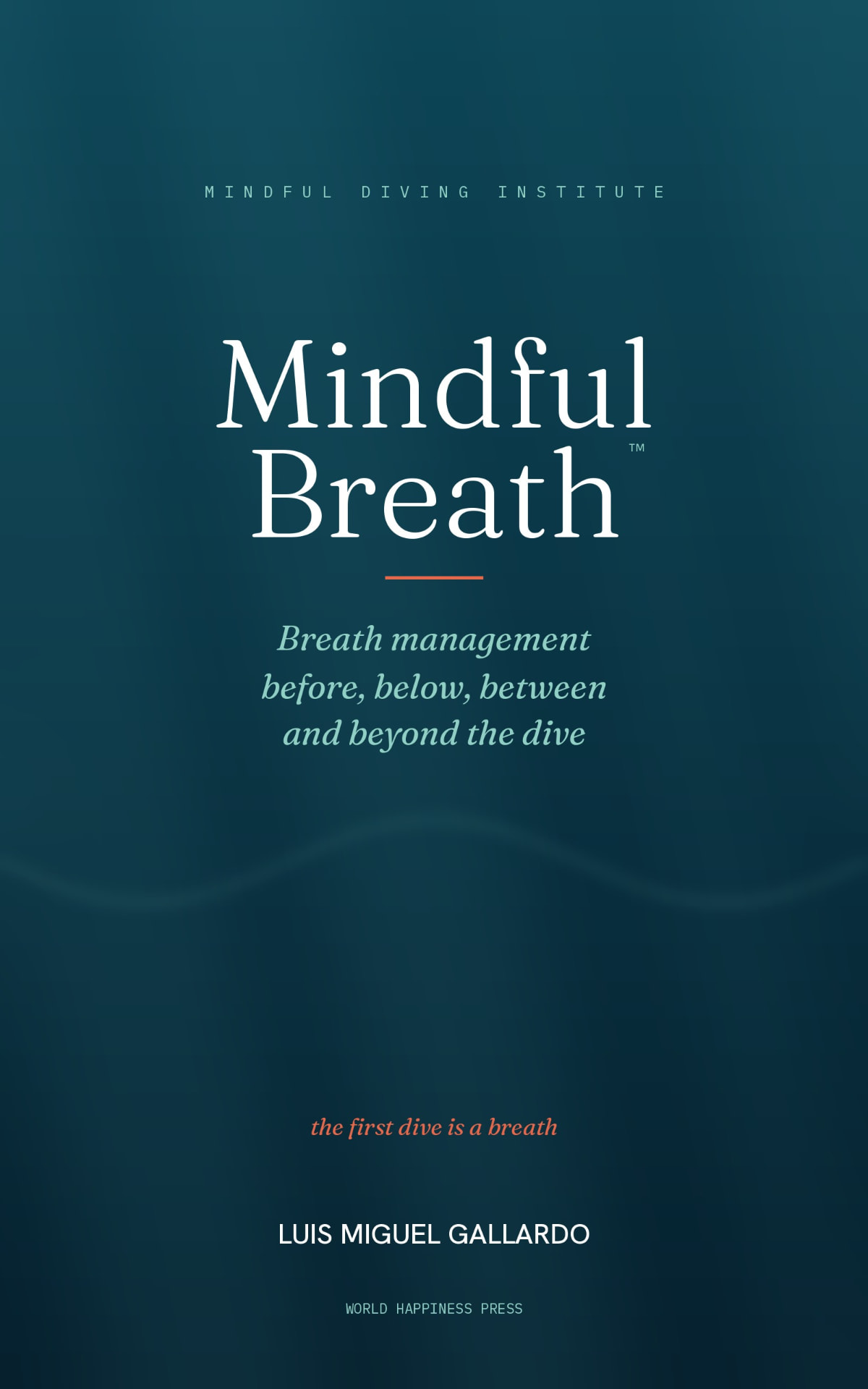
You can explore guided practices on the Mindful Diving Institute's breathing page, suitable for divers and non-divers alike. For a deeper companion, the book Mindful Breath gathers these practices in one place, ready to read before you travel and to return to after every dive.
The breath is always with you. Learning to use it well may be the simplest gift you can give your nervous system, above or below the surface.
See you in the blue.
Luis Miguel Gallardo
Founder, World Happiness Foundation · Co-founder, Mindful Diving Institute
…
Explore this topic
Field notes to your inbox
Stay connected to the shift.
Monthly essays from the Observatory, invitations to Fests and Academy cohorts. Written from abundance — never urgency.