Mindful Diving
The Ocean as a Teacher of Presence: Why Diving Is the Oldest Meditation
Why diving may be the oldest meditation: the regulator breath, weightlessness and Separation, the research, and the 4B arc of Mindful Diving™ for presence.
September 29, 2026·Luis Miguel Gallardo·4 min read
AI insights
Why a single breath through a regulator can teach more about presence than a month of good intentions.
By Luis Miguel Gallardo · 29 September 2026
The diver's breath: an involuntary meditation
Long before anyone sat cross-legged and closed their eyes, human beings were learning presence from water. The ocean does not negotiate. It asks for your full attention, and it asks for it through the breath.
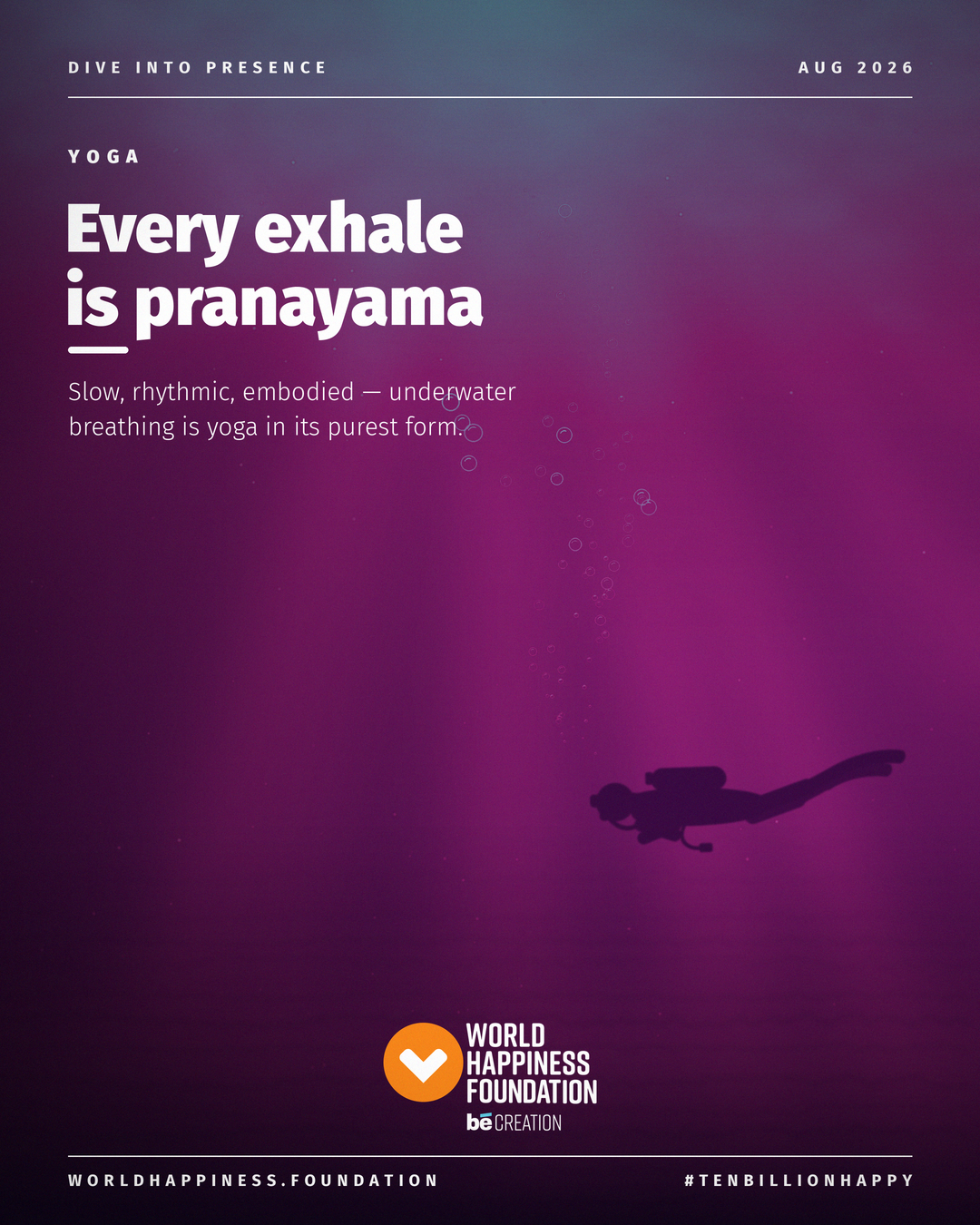
Put a regulator in your mouth and something changes at once. Each inhale has a sound. Each exhale leaves a trail of bubbles you can hear rising past your ears. You cannot breathe carelessly underwater, because every breath affects your buoyancy, your air supply and your calm. Without deciding to meditate, you begin to do exactly what meditation teachers ask: you notice the breath, you slow it down, and you lengthen the exhale.
This is why I call diving an involuntary meditation. The conditions of the dive do the work that willpower usually has to do on land. The slow, complete exhale that divers learn for air economy is the same exhale that tells the nervous system it is safe. The mind that was racing on the boat grows quieter with every cycle of sound and silence.
Weightlessness and the wound of Separation
In my work on the six wounds of humanity, Separation is the wound that feels most modern: the sense of being isolated, cut off from other people and from the living world. We carry it into offices, cities and screens.
Underwater, that boundary softens. When you reach neutral buoyancy, you are held on every side. There is no floor to push against and no ground to defend. Fish pass at arm's length and ignore you, which is its own kind of welcome. The water touching your skin is the same water touching the reef. Many divers describe this as the first time they felt part of nature rather than visitors to it.
Weightlessness is not only a physical state. It is a lived experience of belonging, and belonging is the medicine for Separation.
What the research says
Stories matter, but so does evidence. The Mindful Diving Institute maintains a living review of the scientific literature on diving, immersion and mental wellbeing. So far, 138 papers have been screened and 62 are cited, with findings pointing to effects on anxiety, rumination and attention. The review is published with its own identifier, DOI 10.68220/mdi.2026.004, and is updated as new studies appear.
A living review is honest about what it does not yet know. It does not claim that diving cures anything. It gathers the signals carefully, so that divers, instructors and researchers can build on them rather than on hope alone.
The Fundamental Peace lens
In Fundamental Peace I describe peace not as the absence of pain but as an integrated capacity to regulate oneself under changing conditions. It has four parts, and a dive offers a clear mirror for each of them.
- Flexible attention. Underwater you widen your attention to the reef and your buddy, then narrow it to your gauge and your breath, and back again, without forcing.
- Emotional coherence. The excited self, the cautious self and the curious self must travel together. The dive asks them to cooperate.
- Freedom from the rigid self-story. At fifteen metres, the story you tell about yourself on land grows faint. There is only this breath, this light, this moment.
- Compassionate self-awareness. You learn to meet your own nervousness with kindness instead of judgement, because panic helps no one underwater.
The 4B arc: Before · Below · Between · Beyond
Mindful Diving™ organises every dive as an arc with four moments.
- Before. On the boat, you arrive: you slow the breath, check in with the body and set an intention.
- Below. Underwater, you practise presence through the senses: breath, sound, colour, temperature, touch.
- Between. On the surface interval, you rest and reflect instead of rushing to the next thing.
- Beyond. Back on land, you carry what the ocean taught into daily life, relationships and work.
The arc turns a recreational activity into a practice. The ocean remains the teacher; the arc simply helps you listen.
How to try it
You do not need to be an advanced diver to begin. You need curiosity, a qualified instructor and a willingness to slow down. Start by reading what Mindful Diving™ is, and consider joining the Institute's first official event, Diving into Presence.
Whether you go under the surface this year or simply sit by the sea and breathe, let the ocean remind you of something very old: presence is not something we invent. It is something we return to, one slow exhale at a time.
See you in the blue.
Luis Miguel Gallardo
Founder, World Happiness Foundation · Co-founder, Mindful Diving Institute
…
Explore this topic
Field notes to your inbox
Stay connected to the shift.
Monthly essays from the Observatory, invitations to Fests and Academy cohorts. Written from abundance — never urgency.