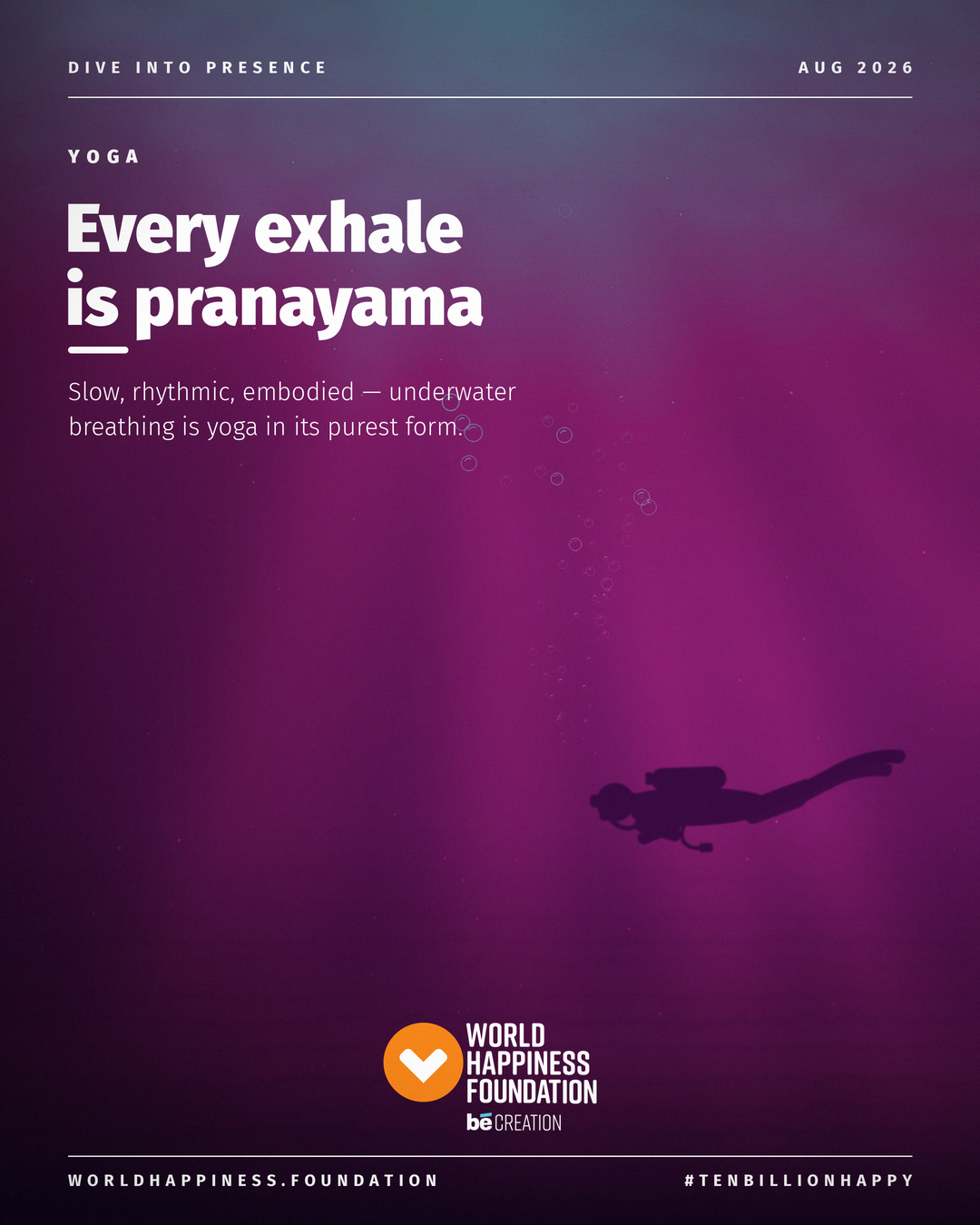
Breath, not bravado
Courses spend most of their time on breathing before the dive and recovery after it. Depth follows from calm, not the other way round.
Guide
If you are looking at your first freediving course, the levels, depths and prerequisites can be confusing. This guide walks through what a course ladder actually looks like, what you learn at each step, and the questions worth asking before you book.

The basics
Freediving is diving on a single breath, without a tank. It is less about lung size than about what your nervous system does when you stop breathing: a calm diver uses less oxygen than a tense one, so relaxation is a skill you train, not a mood you hope for.
Courses spend most of their time on breathing before the dive and recovery after it. Depth follows from calm, not the other way round.
Every responsible course teaches the buddy system: one diver dives, one watches, and the watcher is trained in rescue and recovery.
Letting the pressure in your ears and sinuses match the water around you is the skill that most often limits early depth. It is technique, and it is learnable.
The reason many people keep going is not the numbers. It is the quiet. A single breath removes the noise of the surface, including your own.
The ladder
Course ladders differ between schools, but they progress the same way: skills at the surface, then shallow open water, then real depth, then the responsibility of leading others. Below is the ladder as the Mindful Diving Institute publishes it, with the depths it names.
You learn breathing, relaxation and the safety protocol before depth enters the picture. This is where the habit that keeps you safe is formed.
You need no diving experience at all.
Your first controlled descents on a line, with a trained buddy watching. Equalization, finning technique and turning back early are the whole curriculum.
You need the foundation level and comfort in open water.
Longer descents, colder water, and the discipline of stopping before your limit rather than at it. Judgement matters more than lung capacity here.
You need the previous level and logged dives.
Holding safety for someone else's dive: briefing, watching, rescue, recovery, and knowing when to call a dive off. A different skill from diving well yourself.
You need the depth level and demonstrated rescue competence.
Depths shown are the maximums named for each Mindful Diving level (MD-1 at the surface, MD-2 to 10 m, MD-3 to 18 m). Other schools use different numbers and different names for a similar progression.
Before you book
None of this requires athletic training. It requires honesty about your health and a little patience with your ears.
Breath-hold diving affects your lungs, ears and circulation. If you have respiratory, cardiac, sinus or ear conditions, or you are pregnant, ask a doctor before you book. A good school will ask you to declare this anyway.
Practising gentle equalization while sitting still, long before you are in water, removes the most common reason first dives get cut short.
You do not need to be fast. You need to be unbothered in open water with a mask and fins on.
Rested and hydrated divers relax faster and equalize more easily. This is the cheapest performance gain in the sport.
The experience
Physiology, pressure, safety protocol and rescue, usually online before you arrive so the water time is spent in the water.
Breathing, relaxation, static and dynamic practice, buddy drills and rescue rehearsal where you can stand up.
Descents on a line under supervision, repeated calmly rather than pushed. Progress is measured in composure, not metres.
What happened in your body, what to practise next, and the credential itself once the required skills and dives are complete.
The decision
Price and depth numbers are the least useful comparison points. These questions tell you far more about a school.
If a school cannot answer the safety questions clearly and without irritation, that is your answer.
One approach
The Mindful Diving Institute, an initiative of the World Happiness Foundation, teaches the same underwater skills as any course ladder, and adds the inner training explicitly rather than leaving it to chance. It starts at zero metres with MD-1, so your first commitment is to your breath and not to a depth.
Questions
No. Breath-hold time is an outcome of training, not a prerequisite for it. Foundation courses assume you can hold your breath for a few seconds and are comfortable in water.
Breath-hold diving carries real risk, which is exactly why courses exist. The risk is managed by never diving alone, diving within trained limits, and having a buddy who knows rescue. Any course that treats those as optional is the danger.
Often not deep at all, and that is the point. The Mindful Diving foundation level, MD-1, works at the surface. Depth follows once breathing and safety are automatic.
The theory can be done at your own pace online. The water component is typically a small number of sessions with an instructor. The Mindful Diving levels list their own hours and dive requirements on the certifications page.
Not to start. Schools normally provide mask, snorkel and fins for a first course. A well-fitting mask is the first thing worth buying yourself.
Yes, and many people find it changes how they scuba dive. The breathing and relaxation transfer; the safety protocol is different and has to be learned properly.
It varies widely by school and location. For reference, the Mindful Diving levels are published at 111 euros for MD-1 and MD-2 and 222 euros for MD-3, excluding any centre fees for water time.
Ask a person
Tell us where you are as a diver and what you want the practice to change. We answer personally, and we will tell you honestly if a foundation course is not your next step.
Keep reading
The Institute holds the standard itself. These pages open in a new tab on mindfuldivinginstitute.com.
MD-1 begins online today and finishes in the water with a certified instructor.