
Yoga Vāsiṣṭha Hypnotherapy · 30 hours
YVH Foundations: One Mind, Many Voices
The Yoga Vāsiṣṭha teaches through stories that the mind makes the world it lives in. This program turns those stories into professional practice: trained attention, disciplined imagination and the dialogue between the inner voices of one mind, with Fundamental Peace as the measure.
- 30 hours · 12 weeks
- 24 live · 6 guided self-study
- For coaches and hypnotherapists
- Live sessions in English
- Thursdays from February 11, 2027
A continuing-education program. An application for ICF Continuing Coach Education (CCE) accreditation is in preparation; any CCE units depend on ICF's decision.

World Happiness Academy
YVH Foundations · 30 hours
Free live masterclass
Taste it before you join
75 minutes, live and in English: one tale read aloud, one settling, and one short dialogue between two inner voices. January 14, 2027 and January 28, 2027, at 14:00 Madrid time.
What YVH is
One bridge, three moves
Yoga Vāsiṣṭha Hypnotherapy (YVH) is Luis Miguel Gallardo's model for bringing the Supreme Yoga and the modern science of hypnosis into one practice.
The text
The Yoga Vāsiṣṭha teaches through sixty-four stories that experienced worlds are mind-made, that latent impressions sustain suffering, and that disciplined imagination dissolves them.
The trance
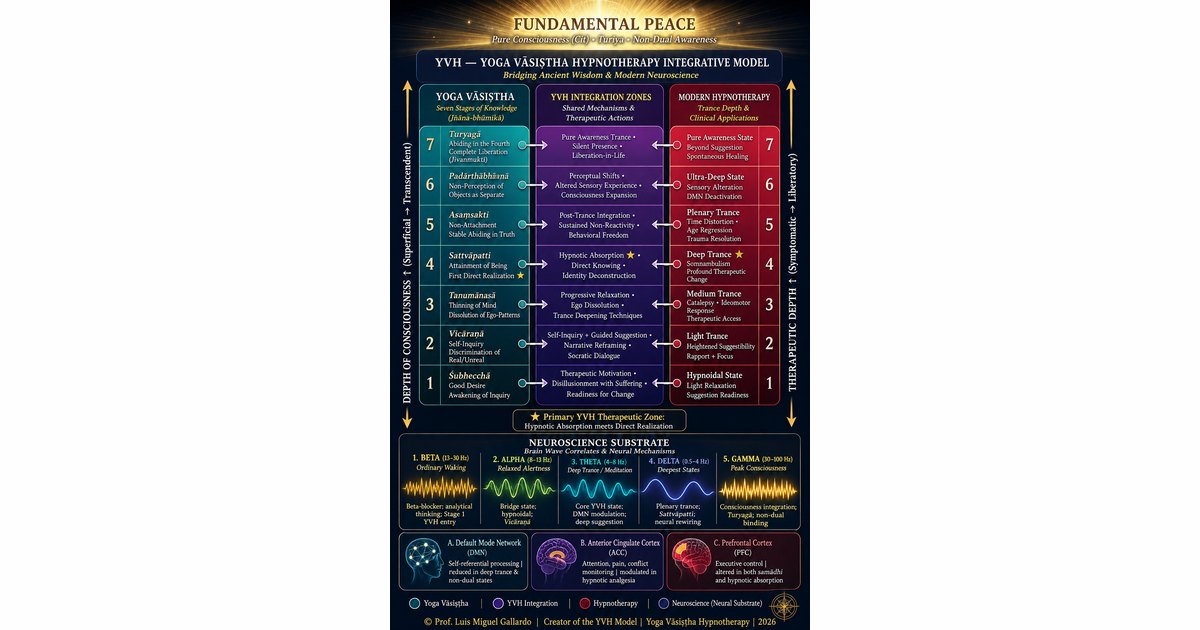
Suggestion, expectancy and absorption reorganise attention, emotion and memory. The model sets the text's seven stages of knowledge beside seven depths of trance, as a map for practice and research.
The measure
The work ends somewhere you can follow: Fundamental Peace, four capacities assessed with the FP20 scale.
YVH Parts Dynamics
Every person speaks with more than one inner voice: the one that wants to belong and the one that needs to stand alone, the one that pushes and the one that protects. YVH Parts Dynamics brings parts dialogue, hypnotic attention and contemplative storytelling together so those voices can meet. The tale of Queen Cūḍālā, who awakens her husband through patient dialogue, role and parable, is its model.
YVH is a model proposed for research. Its correspondences are a map for practice and study, not established mechanisms, and its hypotheses are still to be tested.
The map
Seven rungs: stages of knowledge beside depths of trance
The Yoga Vāsiṣṭha describes seven stages of knowledge. The YVH model sets each beside a depth of trance known to hypnotherapy. In Foundations you learn the whole ladder and practise on its first rungs.
- 7
Turyagā
Abiding in the fourth: liberation-in-life (jīvanmukti)
Pure awareness
Beyond suggestion; spontaneous healing
- 6
Padārthābhāvanā
Non-perception of objects as separate
Ultra-deep state
Sensory alteration, default mode network deactivation
- 5
Asaṃsakti
Non-attachment: stable abiding in truth
Plenary trance
Time distortion, regression, trauma resolution
- 4
Sattvāpatti
Attainment of being: first direct realization
Deep trance
Somnambulism, profound therapeutic change
Primary therapeutic zone
- 3
Tanumānasā
Thinning of mind: ego-patterns dissolve
Medium trance
Catalepsy, ideomotor response, therapeutic access
- 2
Vicāraṇā
Self-inquiry: discriminating real from unreal
Light trance
Heightened suggestibility, rapport and focus
- 1
Śubhecchā
Good desire: the awakening of inquiry
Hypnoidal state
Light relaxation, suggestion readiness
The alignment between stages of knowledge and trance depths is a clinical map: a heuristic correspondence proposed for research, not a claim of identity between contemplative attainment and hypnotic depth.
The eight phases of the YVH protocol
Phase 1
Alliance and map
FP20 baseline
Phase 2
Upaśama induction
Breath-anchored settling
Phase 3
Bhāvanā training
Disciplined imagination as skill
Phase 4
Vāsanā work
Regression to formative imprints
A map in Foundations · practised in The Four Thresholds
Phase 5
Cūḍālā dialogues
Parts and staged role work
Phase 6
Witness stabilisation
Seer/seen decentring
Phase 7
Jīvanmukti rehearsal
Future-pacing liberated action
Phase 8
Integration and self-practice handover
FP20 post-measure
Who it is for
For practitioners who want depth with evidence and ethics
Coaches
ICF-credentialed coaches and graduates of a coach training who want a contemplative, story-based way of working with a client's inner voices, inside the limits of coaching.
Hypnotherapists
Certified hypnotherapists who want a framework that joins induction, parts work and suggestion to a contemplative text, with a measure for the outcome.
Coaches and teachers rooted in India's wisdom traditions
Practitioners who know the Yoga Vāsiṣṭha, Vedānta or yoga from the inside and want to work with them in a professional form that clients and organisations recognise.
Spiritual and transpersonal coaches
Practitioners who already work with meaning, purpose and inner life, and want that work to rest on a text, a method and a way of measuring change.
No knowledge of Sanskrit is needed, and no belief is asked of you or of your clients. The tales are offered as stories to think with; a participant is always free to read them differently or to set one aside.
Curriculum
Twelve live sessions, four modules
Each live session lasts 2 hours, online, and opens with a tale. Between sessions you read, listen and practise: 6 hours of guided self-study with the book, the album and the Atlas.
Module 1
The text
The stories, the ladder and your own starting point.
Session 1 · Feb 11
The threshold
Rāma's question and yours. Agreements, scope of practice, your FP20 baseline, and the first day of the Forty-Day Path.
Tale 1 · Rāma's dejection and the arrivalSession 2 · Feb 18
The mind that makes the world
A story inside a story as a method. Listening to how a client's world is being made.
Tale 3 · Līlā, Padma and the goddess SarasvatīSession 3 · Feb 25
Seven rungs
The seven stages of knowledge beside seven depths of trance, and the limits of that correspondence.
Tale 43 · Manu and Ikṣvāku: the seven stages
Module 2
The trance
Settling, imagination and story as suggestion.
Session 4 · Mar 4
Settling
Upaśama: breath-anchored settling. Presence before any technique.
Tale 22 · UddālakaSession 5 · Mar 11
Disciplined imagination
Bhāvanā as a skill, and what the science of suggestion, expectancy and absorption says about it. The eight phases of the YVH protocol as a map.
Tale 10 · The three princes who never wereSession 6 · Mar 18
Story as suggestion
Choosing a tale, offering it, and leaving the client free to interpret or decline it.
Tale 17 · Janaka and the song of the Siddhas
Module 3
Many voices
YVH Parts Dynamics in practice.
Session 7 · Apr 1
One mind, many voices
The foundations of parts dialogue, and how YVH Parts Dynamics stands beside Internal Family Systems, ego state work, Voice Dialogue and psychosynthesis.
Tale 31 · Jīvaṭa and the hundred RudrasSession 8 · Apr 8
The Cūḍālā dialogues
Patient dialogue, role and parable: letting each voice speak and be heard.
Tale 34 · Cūḍālā and ŚikhidhvajaSession 9 · Apr 15
The king who became four
Voices that pull in different directions. The Six Wounds and their virtues as a compass for the conversation.
Tale 55 · Vipaścit, the king who became four
Module 4
The measure
The witness, integration and your practice.
Session 10 · Apr 22
The witness
The seer and the seen: stabilising the place from which all the voices can be heard.
Tale 25 · Vītahavya and the body in the caveSession 11 · Apr 29
Living it
Rehearsing free action in ordinary life. Ethics, referral, and what not to claim.
Tale 61 · Kundadanta and the hermit of the kadambaSession 12 · May 6
The return
Practice demonstrations, a closing FP20, and how this enters your work.
Tale 64 · The return
Sessions are on Thursdays. There is no session on March 25, 2027. Tale numbers follow the Vāsiṣṭha Atlas. Each tale opens on lmgallardo.org, in English and Spanish.
Two practice tracks
One classroom, two scopes of practice
Everyone learns the same model. In the practice labs you work inside the scope of your own profession.
Coaching track
Conversational practice with eyes open: stories, trained attention and parts questions inside a coaching agreement, with no formal hypnotic induction and no regression. You learn when a conversation belongs with a therapist and how to refer, in line with the ICF Code of Ethics.
Hypnotherapy track
The same work with formal induction and depth: settling, imagination training, tale-based suggestion and parts dialogue in trance, inside your existing certification and local rules.
Regression to formative imprints (phase 4 of the YVH protocol) is taught here as a map, not as a practice. It has its own program for certified hypnotherapists, described below.
What we ask of every participant
- Imagery in trance is a subjective experience. It is never used to confirm forgotten events or past lives.
- This program is continuing education. It does not train you to diagnose or treat, and it does not replace medical, psychiatric or psychological care.
- The Yoga Vāsiṣṭha is a philosophical and religious text with its own purposes. We read its tales in context and with respect for the tradition that keeps them.
One body of work
What you will hold in your hands
The program is taught from published work: papers, books, an album and an atlas of sixty-five tales. All of it stays with you.
The Mind That Makes the World
The reader's companion: the stories, the science of the trance and the eight-phase path.
The bookThe Sixty-Four Tales of the Supreme Yoga
The tales in two volumes, each with its practice.
The two volumesThe Vāsiṣṭha Atlas
Every tale joined to its trance, its wound and virtue, its stage of transformation and the part of Fundamental Peace it trains.
Enter the AtlasThe Forty-Day Path
One tale a day, with the FP20 on days 1, 20 and 40. You walk it during the first six weeks.
See the pathTwelve Songs of the Supreme Yoga
The album and its libretto, in English and Spanish. A song accompanies each module.
ListenThe frameworks behind it
Fundamental Peace and the FP20
Flexible attentional control without effortful suppression, emotional coherence across self-states, reduced self-referential rigidity and compassionate self-awareness. Gallardo & Chetri, Behavioral Sciences, 2026.
The paperThe Supreme Yoga and the Science of Suggestion
The paper that sets out the YVH model, its eight phases and its five hypotheses. Journal of Happytalism and Fundamental Peace, 2026.
The paperThe Integrative Emotional Alchemy Framework
Shadow, Gift and Essence, and the Six Wounds with the virtues that meet them. Each tale in the Atlas is indexed to one of them. Frontiers in Psychology, 2026.
The paperThe Integrative Transformation Model (ITM)
Five cumulative stages, from Unconscious Reactivity to Transcendent Integration. It describes the development of the person doing the work, starting with you.
The ITMROUSER
Relations, Openness, Understanding, Self-Awareness, Empowerment, Reflection: the six checks we use to debrief every practice lab.
The ROUSER modelIAM: from I AM to WE ARE
The many voices of one mind are also the many voices of a team and a community. The last session looks at where this work goes next.
I AMCompletion
To complete the program
- Attend at least 10 of the 12 live sessions; the others are made up with the recording and a written reflection.
- Walk the Forty-Day Path in the first six weeks and complete the FP20 on days 1, 20 and 40, and once more at the last session. Your scores are yours; they are not graded.
- Write up two practice sessions with a peer from your own track.
- Give one practice demonstration in the final sessions and receive feedback.
You receive a World Happiness Academy certificate of completion for 30 hours, signed by Luis Miguel Gallardo. It records continuing education. It is not a hypnotherapy certification, and it does not confer a practitioner title.
The pathway
Where it leads
30 hours · this program
YVH Foundations
The model, the tales, trained attention and YVH Parts Dynamics, for coaches and hypnotherapists.
In design · for certified hypnotherapists
YVH Regression: The Four Thresholds
The follow-up program: four regressions taught in order. It opens after the first Foundations cohort, for certified hypnotherapists who have completed Foundations.
- 1Age regression
- 2Womb regression
- 3Past-life regression
- 4Interlife regression
Later
YVH Practitioner
Supervised casework and the competencies that the research programme is defining. It will open once those competencies are published.
Interlife regression is taught here as part of YVH. It is not Life Between Lives®, the method of the Michael Newton Institute, which trains and certifies its own facilitators.
The rest of the Academy

Faculty
Who teaches
Luis Miguel Gallardo
Creator of the YVH model · Clinical and transpersonal hypnotherapist · ICF PCC
Luis Miguel Gallardo is Professor of Practice at the Yogananda School of Spirituality and Happiness, Shoolini University (India), Founder and President of the World Happiness Foundation and Co-CEO of the Institute of Interpersonal Hypnotherapy.
He is the author of The Mind That Makes the World and The Sixty-Four Tales of the Supreme Yoga, and of the papers on Fundamental Peace, the Integrative Emotional Alchemy Framework and the YVH model that this program is taught from.
Entry requirements
Who can join
- Coaches: an ICF credential, or a completed coach training such as an ICF Level 1 program.
- Hypnotherapists: a hypnotherapy certification from a recognised school or association.
- Therapists, and yoga or meditation teachers who also coach: by conversation with the faculty.
- Working English, for the live sessions and the reading.
First cohort
The founding cohort
Twelve live sessions on Thursdays, from February 11, 2027 to May 6, 2027, 14:00–16:00 Madrid time. That is 18:30 in India and 08:00 in Miami when the program begins, and 17:30 in India from April.
12 to 24 participants, so everyone practises in every session.
Founding cohort fee: 890 USD. Standard fee from the second cohort: 1,190 USD.
For participants resident in India: 45,000 INR.
The fee includes the twelve live sessions, the recordings, the practice labs and the certificate. The books are bought separately.
Places are confirmed by email, with payment details. There is nothing to pay on this page.
Join the founding cohort listFundamental Peace is not the absence of pain… it is the transmutation of its energy into love and compassion.
Learning together
A community from all over the world
People join the Academy's programs from many countries. These are some of the rooms where this community has met.

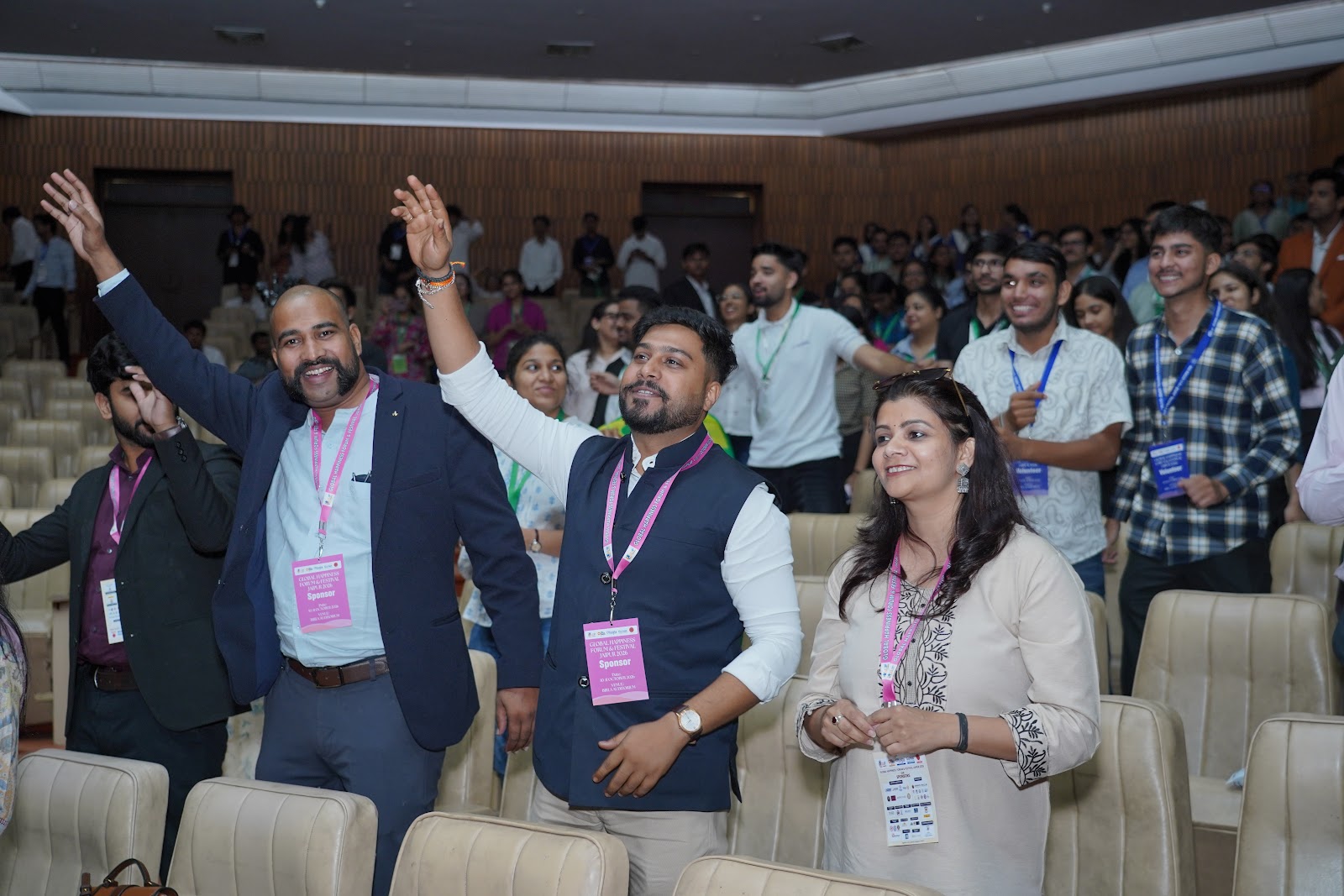

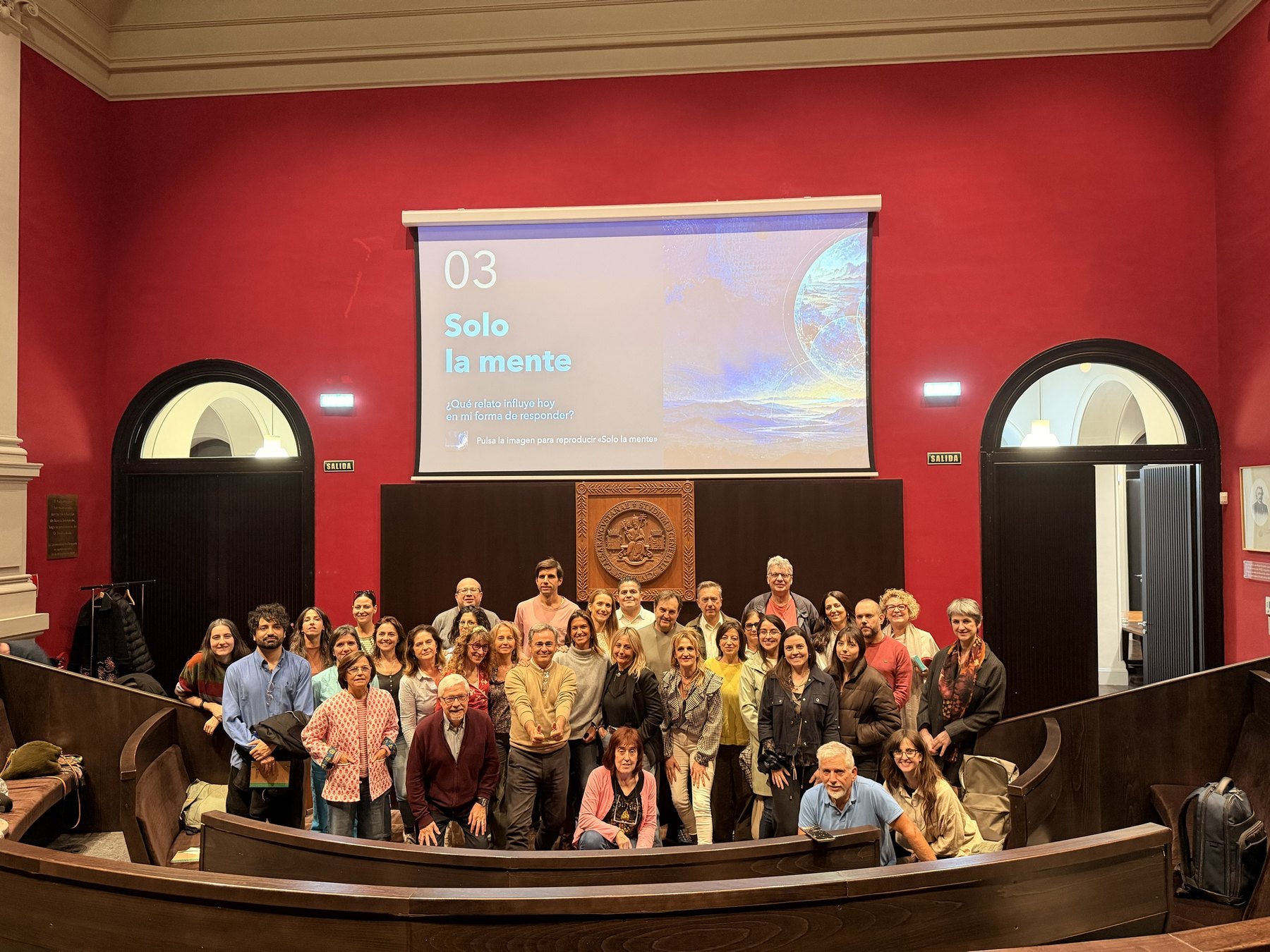

Photos from gatherings of the World Happiness Foundation community: India · Costa Rica · Spain · Bhutan.
Voices
What coaches say about learning with the Academy
From participants in the Academy's Transpersonal Coaching programs, published as they authorised, with role and country.
This approach develops the coach as much as the coaching method. The training asked me to notice my own assumptions, reactions, and need to produce an answer. That self-awareness made me more ethical, more present, and more useful to clients.
Coach Educator|El Salvador
Transpersonal Coaching allowed me to work with the whole human being inside the organizational role. Leaders could examine ambition, vulnerability, purpose, and impact without losing sight of real business demands. The result was both deeply personal and highly relevant.
Organizational Coach|Nicaragua
The most meaningful shift was learning to trust emergence. Not every powerful session follows a predictable route. By staying present and curious, I can help clients discover possibilities that were not visible when the conversation began.
Transformational Coach|Malaysia
Authorized testimonials, published as given in English.
The coaching pathway
This program is one step on a longer path
One-to-one coaching, mentor coaching, team coaching and well-being leadership in organisations, built on Fundamental Peace, ROUSER, the ITM and the Integrative Alchemy Model.
Questions
Before you join
Is this a hypnotherapy certification?
No. It is a 30-hour continuing-education program. Coaches do not learn to induce hypnosis in it, and hypnotherapists work inside the certification they already hold.
Will I earn ICF CCE units?
We are preparing an application for ICF Continuing Coach Education accreditation. ICF decides whether the program is accredited and how its hours are divided between Core Competencies and Resource Development. Until ICF has decided, we do not promise CCE units. Every participant receives a certificate recording the hours.
Does the program include regression?
Not as a practice. Regression is one phase of the YVH protocol and you will learn where it sits and why. Practising it belongs to YVH Regression: The Four Thresholds, the follow-up program for certified hypnotherapists: age, womb, past-life and interlife regression.
Do I need to know the Yoga Vāsiṣṭha, or share its worldview?
No. We read the tales together in English, from public-domain translations, and you can work with them whatever you believe. Whether the method helps regardless of belief in the text's metaphysics is one of the hypotheses the research programme will test.
How solid is the evidence?
Hypnosis has a strong research base, and Fundamental Peace is described in a peer-reviewed paper. YVH itself is a model proposed for research: its correspondences are a map, and its five hypotheses have not yet been tested. We teach it in that spirit.
Can I use it with my clients afterwards?
Yes, inside the scope of your own profession and the rules where you practise. The certificate records your training; it does not give you a new title.
Founding cohort
Join the founding cohort list
Leave your email and we will write to you with the calendar, the application form and the payment details as soon as places open.
Tell me when places open
One email to confirm your address, then only news about this program and the Academy.
A continuing-education program. An application for ICF Continuing Coach Education (CCE) accreditation is in preparation; any CCE units depend on ICF's decision. YVH is a model proposed for research. Its correspondences are a map for practice and study, not established mechanisms, and its hypotheses are still to be tested.