Skip to content

El Yoga Supremo

El Proyecto Yoga Vāsiṣṭha

El Yoga Supremo — el libro, la música y la ciencia del trance sanador

Una ofrenda de la World Happiness Foundation hacia la Paz Fundamental

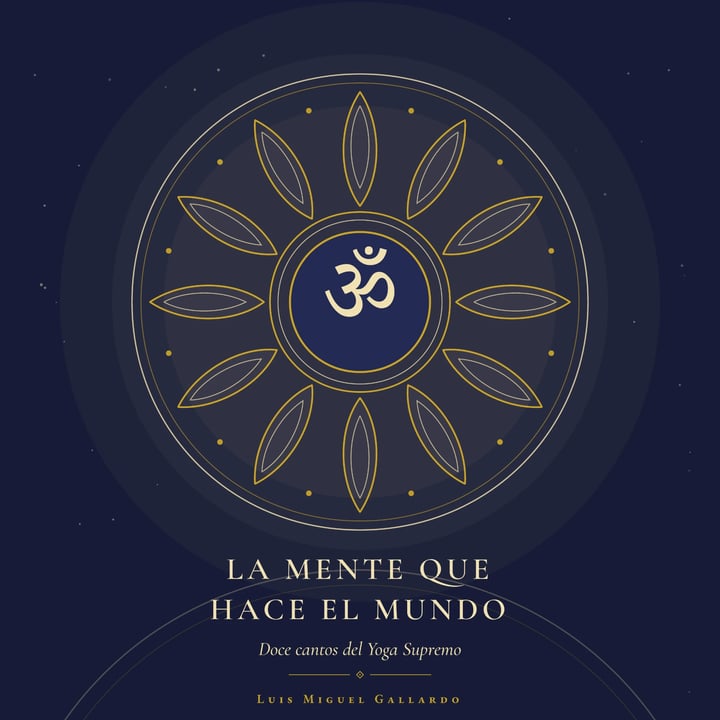
Portada del álbum Doce cantos del Yoga Supremo

Tres puertas

Una enseñanza, tres formas.

El artículo

The Supreme Yoga and the Science of Suggestion

  • Journal of Happytalism and Fundamental Peace, Vol. 1, n.º 1 (2026)
  • DOI 10.68220/whf.2026.001 · CC BY 4.0
  • Research Lab de la World Happiness Foundation

El libro

The Mind That Makes the World: The Supreme Yoga, the Healing Trance, and the Path to Fundamental Peace

  • Luis Miguel Gallardo
  • World Happiness Press · The Fundamental Peace Books

El álbum

Doce cantos del Yoga Supremo

  • Música y letras de Luis Miguel Gallardo
  • Cuatro movimientos · doce cantos

El modelo

El Modelo YVH

El artículo propone el Modelo YVH: las siete etapas del conocimiento del Yoga Vāsiṣṭha (jñāna-bhūmikā) alineadas con las profundidades del trance sanador, con sattvāpatti — el alba del ser — como zona terapéutica principal. Su protocolo clínico de ocho fases toma como modelo a la reina Cūḍālā, la sanadora de la propia tradición. El horizonte que señala es la Paz Fundamental, medida por el FP20.

Leer el artículo completo

La experiencia del álbum

Doce cantos del Yoga Supremo

Cuatro movimientos, doce cantos. Cada uno lleva una figura de la tradición, un mantra con su fuente y una línea para llevarte contigo.

Movimiento I

El Umbral

El narrador, el buscador, la enseñanza

Un poeta entra en su propia historia; un príncipe vuelve a casa incapaz de dejar de ver; un sabio responde con el verso sobre el que gira toda la tradición. La puerta del álbum — y del libro — se abre desde dentro.

01

La historia dentro de la historia

Valmiki, el poeta del marco

El Yoga Vasistha se abre como una historia que pasa de narrador en narrador — y el poeta Valmiki hace lo que solo los más grandes se atreven a hacer: entra en su propio amanecer. Esta primera canción es el umbral. Un bordón, una campana, una voz junto a tu oído, y la revelación silenciosa sobre la que descansa toda la tradición: no estás fuera de la historia, escuchando. Siempre estuviste dentro.

Mantra

Om Om Shantih Shantih Shantih

Pranava & Shanti Mantra · the seed syllable and the threefold peace

El sonido primordial, la puerta abierta; la paz dicha tres veces — para el cuerpo, la mente y el mundo que comparten.

Eres la historia, y aquel a quien se le cuenta.

Letra(en inglés y sánscrito)

Om... Om... Om Before the world, a word was waiting Before the word, a silence sang A poet closed his eyes at daybreak And every universe began He wrote a river, wrote a mountain Wrote a prince with heavy eyes Wrote a sage whose voice was morning Then stepped inside his own sunrise This is the story within the story The dream that dreams the dreamer awake Listen: the teller becomes the telling The ocean singing itself as wave And you who hear it, you are in it A lamp inside a lamp inside a flame Whoever truly hears this story Will never be the same Om... Om... Om Om Shanti... Shanti... Shanti Every listener becomes the listening Every reader turns the page of themselves Om

02

El príncipe que vio a través del mundo

Rama, y el sagrado desencanto

El príncipe Rama vuelve a casa con la extraña enfermedad que precede a toda sabiduría: ha visto que nada de lo que puede sujetar permanecerá sujeto. La tradición lo llama vairagya y lo honra como primer peldaño — desencanto con la mente automática, no con la vida. La canción cae con cello y sarangi, y luego gira: el vacío se vuelve umbral, y el propio dolor señala a casa.

Mantra

Neti Neti

Brihadaranyaka Upanishad · the way of negation

Ni esto, ni esto — lo que puede ser observado no es el observador.

Deja que el dolor sea brújula.

Letra(en inglés y sánscrito)

I walked through every golden city I touched the silk, I wore the crown But beauty fades like breath on mirrors And every tower tumbles down What is youth A guest of morning What is wealth A wave that leaves I have seen the river swallow kingdoms Tell me something time can't thieve So I lay my questions at your feet What never dies, what stays complete If all the world is passing through Show me the seer, show me the true Neti neti... not this, not this Om Shanti, Shanti, Shanti And in my emptiness, a doorway And in my ashes, hidden light The ache that emptied out my hands Was turning them toward the height So I lay my questions at your feet What never dies, what stays complete If all the world is passing through Show me the seer... show me the true What never dies Show me... show me

03

Solo la mente

La respuesta del sabio

Vasistha, el maestro del alba

El sabio no consuela al príncipe; le dice la verdad. El mundo que temes está tejido — y el telar es la mente. Solo la mente ata; solo la mente libera. Después, el segundo regalo: el esfuerzo propio sobre el destino — rema, y la corriente responde. Un barítono cálido sobre sitar y tabla, música de amanecer, con el antiguo shloka cantado en su centro y la más vieja oración de maestro y discípulo como puente.

Mantra

Mana Eva Manushyanam Karanam Bandha-Mokshayoh

Yoga Vasistha · the verse the whole teaching turns on

Solo la mente es la causa de la atadura y de la liberación.

Vuelve al hacedor hacia su obra.

Letra(en inglés y sánscrito)

Child of dawn, unclench your sorrow The world you fear is woven thread The loom is mind, the cloth illusion The weaver wakes, the fear is shed Mind alone builds every prison Mind alone unlocks the door Turn the maker toward the making You were free forevermore Mana eva manushyanam Karanam bandha-mokshayoh (Mind alone is the cause Of bondage and of freedom) Fate is only yesterday's own effort Effort is tomorrow's fate Row, my son — the current answers Your own two hands unlock the gate Mind alone builds every prison Mind alone unlocks the door Turn the maker toward the making You were free forevermore Om Saha Navavatu, Saha Nau Bhunaktu Saha Viryam Karavavahai Tejasvi Nau Adhitam Astu Ma Vidvishavahai Om Shanti Shanti Shanti (May we be protected together, nourished together May we work together with great energy May our study be luminous May there be no discord between us) You are the light the lamp is seeking Tat Tvam Asi... you are That

Movimiento II

Los Relatos

Cuatro puertas de transformación

La reina Lila vuela a través de una semilla de mostaza; el rey Lavana vive sesenta años en un suspiro; Gadhi emerge antes de que se cierren las ondas; el cuervo Bhusunda sobrevive al diluvio cabalgando la respiración. Los experimentos de la propia tradición sobre cuán hondo puede ir la mente — y qué perdura al regresar.

04

El universo en una habitación

La reina Lila y la diosa Sarasvati

La reina Lila no deja que la lámpara se apague. Llama por su nombre a la diosa de la sabiduría y aprende a volar — sobre el pensamiento, la única ala que nadie ha necesitado jamás — hacia el sueño de su esposo, donde una creación entera vive en un espacio más pequeño que una semilla de mostaza. Mundos dentro de mundos; cada uno tan real como es creído. Dos voces de mujer a dúo, arpa y veena, suspendidas en el aire.

Mantra

Om Aim Saraswatyai Namaha

Traditional bija mantra of the goddess of wisdom

Me inclino ante Sarasvati; Aim es la sílaba semilla de la visión que llega.

Lo que crees por completo se convierte en cielo.

Letra(en inglés y sánscrito)

My love lay still at midnight's border I would not let the lamp go out I called the goddess of the rivers Of speech, to wash away my doubt Come, little queen, leave weight behind you Thought is the only wing you need Your husband dreams a whole creation Inside a single mustard seed Worlds within worlds within a world A palace folded in a room Whatever mind believes completely Becomes the sky, becomes the bloom I flew through ceilings made of aeons I watched him reign, I watched him grieve Each life as real as any other Each real only as we believe Om Aim Saraswatyai Namaha Om Aim Saraswatyai Namaha Space is a thought the thinker opened Time is a thread the dreamer drew The curtain thought has drawn between us Thought can draw open too Worlds within worlds within a world A palace folded in a room Whatever mind believes completely Becomes the sky, becomes the bloom Awake inside the dream Awake... awake

05

Una vida en un instante

El rey Lavana y el ilusionista

Un ilusionista alza una vara y, mientras la lámpara apenas parpadea, el rey Lavana vive sesenta años — hambruna, amor, pérdida — y despierta en su propio trono antes de que la corte termine de respirar. Y camino adelante, la otra vida está ahí, tibia como el pan. La descripción premoderna más precisa del trance jamás escrita, construida como un groove hipnótico que se desliza a medio tiempo de sueño. Su misericordia: el sueño corre en ambos sentidos.

Mantra

So Ham

Ajapa mantra · the breath's own confession

Yo soy Eso — más allá de cada vida, soñada o despierta.

Si la pena puede soñarse tan hondo, también la gracia.

Letra(en inglés y sánscrito)

A stranger came into my court With peacock feathers, eyes of smoke He raised a wand of woven horsehair And sixty years passed while he spoke I fell from throne to dust and famine I wed my sorrow, raised my pain I traded rings for one small fire I lost the names I loved to rain A lifetime in a moment A moment holds a life Who stretches time like water The mind, the mind, the mind I woke — the lamp had barely flickered The court still held its indrawn breath Yet down the road my other lifetime Lay real as morning, warm as bread A lifetime in a moment A moment holds a life Who stretches time like water The mind, the mind, the mind If grief can be this deeply dreamt Then so can grace, then so can light The spell that bound me can unbind me The dream runs both ways in the night So Ham... So Ham (Beyond all my lifetimes... I am That) Sixty years... one breath So Ham

06

El estanque

Gadhi, el brahmán de las aguas

La historia hermana de Lavana, más silenciosa y más cerca de la piel. Gadhi se arrodilla al atardecer con un cuenco de agua en la mano, y la superficie se abre: vidas enteras pasan bajo ella, y emerge antes de que las ondas se cierren. Los autores antiguos hacían la pregunta del clínico: ¿perdura lo que ocurre en las profundidades? Guitarra como ondas, una flauta grave, y un mantra que es conversación.

Mantra

Ko Ham? · So Ham

Traditional self-inquiry and its homecoming

¿Quién soy? Yo soy Eso — la pregunta y su respuesta en una sola respiración.

Eres el agua, no los ropajes.

Letra(en inglés y sánscrito)

I knelt beside the evening water To wash the day from off my hands The surface opened like a doorway And I came up in other lands I wore a life that wasn't mine there Or was it Flesh and salt and years I begged, I feasted, I was crowned there I learned the taste of stranger tears How deep is one immersion How long one held-in breath I lived whole years beneath the surface And rose before the ripples left And when I walked the waking roads The village knew that other name Two worlds, both stitched of the same seeing Two rivers from a single rain Ko Ham? (Who am I?) So Ham (I am That) Ko Ham? So Ham Ko Ham? So Ham Not the roles the river gave me Not the crowns that come and go I am the water, not the wearing The knowing shining through the known How deep is one immersion How long one held-in breath I lived whole years beneath the surface And rose before the ripples left Rise... the ripples close The light remains

07

El cuervo al borde del tiempo

Bhusunda, el testigo inmortal

En un árbol al borde del cielo vive Bhusunda, el cuervo que ha sobrevivido a todo. Cuando le preguntan el secreto, da la respuesta menos dramática del texto: la respiración. Es la inducción de la propia tradición — la atención cabalgando el prana — honrada literalmente: cincuenta pulsos por minuto, el tempo de un corazón en reposo, la respiración como percusión, un mantra al paso de tu aliento. En el segundo estribillo ya no escuchas la canción: la estás haciendo.

Mantra

Ham-Sa · So Ham

Ajapa Gayatri · the swan of the breath

Ham al inhalar, Sa al exhalar; escuchado el tiempo suficiente, se invierte en So Ham — Yo soy Eso.

Dentro… fuera… permanece.

Letra(en inglés y sánscrito)

I have watched the mountains soften I have seen the oceans trade their beds Suns go out like evening candles And still this one breath rises... rests Kingdoms I have counted thousands Floods and fires, the world re-sown High on the tree at the edge of heaven I keep the nest of the unknown Ride the swan of breath, beloved In... and out... the only road Prana rising, prana falling The wave goes home, the wave goes home Ham Sa Ham-Sa... So Ham So Ham... So Ham (I am That, riding the breath) When the deluge drinks the mountains I fold my wings inside the Om When a new dawn draws the outlines I breathe — and worlds are drawn back home Ride the swan of breath, beloved In... and out... the only road Prana rising, prana falling The wave goes home, the wave goes home In... out Remain

Movimiento III

La Reina

La corona del álbum

Cudala alcanza la liberación primero — coronada, en el día común — y regresa a por su amado disfrazada de joven sabio, encontrándolo dentro de su propio mundo. La sanadora de la propia tradición: todo el camino de ocho fases del libro sigue sus huellas.

La corona del álbum

08

Reina de ambos mundos

El canto de Cudala

Cudala, la reina que despertó primero

Cudala despierta primero — coronada, en el día común — y cuando su esposo huye al bosque conservando solo el «yo», hace algo más sabio que corregirlo: entra en su mundo como el joven sabio Kumbha, enseña con historias que él puede sostener, lo prueba con dulzura y se retira en cuanto su realización se sostiene sola. La sanadora de la propia tradición; todo el camino de ocho fases del libro camina detrás de esta reina. Una mezzosoprano en pleno vuelo, trueno sobre seda, y una declaración que no necesita testigo.

Mantra

Aham Brahmasmi Shivo Ham

Brihadaranyaka Upanishad mahavakya · with the declaration of Shiva-nature

Yo soy el Infinito; yo soy la paz misma, lo auspicioso.

Reina, y sé libre. Ama, y sé luz.

Letra(en inglés y sánscrito)

They said the truth lives past the river In caves where silent hermits stay I found it pouring through my mornings Crowned, and in the common day Silk could never hide it Duty could not dim I woke inside my living Light in every limb I am the queen of both the worlds The throne of earth, the throne of sky I rose on wings that stillness gave me I asked no permission to fly Aham Brahmasmi — I am That The sun asks no one leave to shine I am the queen of both the worlds And both the worlds are one My love mistook the road for leaving Gave up the gold but kept the "I" So I unbraided crown and beauty And walked as morning in disguise I met him where his world was standing I spoke in stories he could hold I watched him burn his hut of holiness To find the gold beyond the gold Not by force and not by fleeing Not by ash and not by throne By the seeing of the seer Love brings the wanderer home Aham Brahmasmi... Aham Brahmasmi Shivo Ham... Shivo Ham (I am the Infinite... I am peace itself) Aham Brahmasmi... Shivo Ham I am the queen of both the worlds The throne of earth, the throne of sky I rose on wings that stillness gave me I asked no permission to fly Aham Brahmasmi — I am That The sun asks no one leave to shine I am the queen of both the worlds And both the worlds are one Rule, and be free Love, and be light Both hands full — and nothing held

09

El oro más allá del oro

El rey Shikhidhvaja, respondido por Cudala

El rey Shikhidhvaja lo entregó todo y conservó al que entrega: el pequeño «mío», el renunciante orgulloso de renunciar. Un joven sabio de ojos extrañamente familiares lo deshace con una sola pregunta — y cuando el cuenco cae al río, cae el velo: su maestro lleva el rostro de su amada. La escena de reconocimiento más tierna de las escrituras del mundo, cantada a dúo junto al fuego y abriéndose al amanecer: vuelve a casa — la corona no te manchará; el mundo también es verdad.

Mantra

Tat Tvam Asi

Chandogya Upanishad mahavakya

Tú eres Eso — el reconocimiento, como solo puede decirlo un amado.

La última posesión es el «mío».

Letra(en inglés y sánscrito)

I gave the treasury to beggars I gave the palace to the wind I kept a bowl, a mat, a fire And kept the keeper hid within A young sage found me in the forest With eyes I almost recognized He asked me, "What have you abandoned If you're still the one who's wise" Throw the bowl into the river Let the last possession go Not the mat, not the fire The little "mine," the quiet "no" Tat Tvam Asi — thou art That The gold beyond the gold And when the young sage dropped the veil My teacher wore my lover's face The truth had walked beside me always Patient as dawn, disguised as grace Come home — the crown will not defile you Come home — the world is also true We'll reign with open hands together And freedom will reign through us too Tat Tvam Asi (Tat Tvam Asi) Tat Tvam Asi (Tat Tvam Asi) Om Shanti... Shanti... Shanti Throw the bowl into the river Let the last possession go Not the mat, not the fire The little "mine," the quiet "no" Tat Tvam Asi — thou art That The gold beyond the gold Open hands... open throne Free

Movimiento IV

El Ascenso y el Regreso

La escalera, el río, la paz

Siete peldaños de luz ascienden hacia el siempre; la ciencia del trance sanador vuelve a su fuente; y todas las voces regresan para el final — la Paz Fundamental, el cielo que sostiene la tormenta.

10

Siete peldaños de luz

Las siete jnana-bhumikas

El texto es tierno con quien empieza: nos da un mapa. Siete etapas del conocimiento, siete peldaños de una sola escalera — con la broma maravillosa en lo alto: al llegar, no queda escalador. La canción sube mientras las nombra, un coro que convierte el sánscrito en una escalera cantable, y en Sattvapatti — el alba del ser — crece el jardín de la sanación: la zona donde toda la práctica del libro hace su trabajo.

Mantra

Shubheccha · Vicharana · Tanumanasa Sattvapatti · Asamsakti Padartha-bhavana · Turyaga

Yoga Vasistha · the seven stages of knowledge

Las siete etapas del conocimiento, cantadas en ascenso, resolviéndose en un solo Om.

Sube descansando; asciende soltando.

Letra(en inglés y sánscrito)

One ladder Seven rungs And at the top — no climber left at all A longing wakes before the sunrise A homesick ache for what is true Shubheccha... Shubheccha (The good desire) Now ask the question like a lantern Turn every stone of "I" and "mine" Vicharana... Vicharana (The inquiry) The clouds grow thin, the mind grows quiet Old habits loosen, thread by thread Tanumanasa... Tanumanasa (The thinning of the mind) Climb by resting, rise by releasing Every rung is made of you Seven names for one arriving The sky was always shining through Then being dawns — the first awakening Here the healing garden grows Sattvapatti... Sattvapatti (The dawn of being) Act in the world and wear it lightly Honey on fingers, nothing sticks Asamsakti... Asamsakti (The sweet non-clinging) Now things are light in shapes of things The world one taste of shining mind Padartha-bhavana... Padartha-bhavana (The melting of objects) Beyond the waking, dream and sleeping The fourth, the always, the arrived Turyaga... Turyaga (Abiding in the fourth) Climb by resting, rise by releasing Every rung is made of you Seven names for one arriving The sky was always shining through Shubheccha... Vicharana... Tanumanasa Sattvapatti... Asamsakti... Padartha-bhavana Turyaga Om No rung, no ladder — only sky

11

Devuelve el río

El linaje olvidado — Faria · Bengala · Braid

La ciencia del trance sanador no empezó donde dicen los manuales. Su intuición fundadora cruzó el océano con el abate Faria de Goa — el poder duerme dentro del que duerme; su primera gran cosecha se recogió en Bengala; y su encuentro con el yoga llegó cuando un cirujano leyó sobre el aliento invernado de un yogui. Esta canción es el acto de restitución del álbum: fado para el marinero, texturas baul para Bengala, armonio que reúne a todos — el río devuelto a casa, terminando en pura alegría de kirtan.

Mantra

Loka Samasta Sukhino Bhavantu

Traditional Sanskrit blessing

Que todos los seres, en todas partes, sean felices y libres.

Lo que te sanó vino de alguna parte. Da las gracias transmitiéndolo.

Letra(en inglés y sánscrito)

A son of Goa crossed the water With one lamp hidden in his coat "The power sleeps within the sleeper No iron wand, no master's stroke" In Bengal courtyards, trance was medicine Hands of the land, names history lost And far away a northern surgeon Read of a yogi's wintered breath Return the river to the mountain Carry the song back to its source The science of the healing whisper Comes home along its oldest course Let it come home... let it come home For every book that kept the treasure And lost the names of those who gave We speak them back into the morning We bring the river to the wave Not to take, and not to tame We lay the science on the altar We bow, and speak the older names Return the river to the mountain Carry the song back to its source The science of the healing whisper Comes home along its oldest course Let it come home... let it come home Loka Samasta Sukhino Bhavantu Loka Samasta Sukhino Bhavantu Loka Samasta Sukhino Bhavantu (May all beings everywhere be happy and free) Home... the river remembers Home

12

Paz Fundamental

El mundo es como lo ves

El final — todas las voces regresan

El príncipe pidió una sola cosa que nunca lo abandonara, y el sabio le devolvió sus propios ojos. Todas las voces regresan para el final — y lo que queda cuando el miedo se desata es la Paz Fundamental: no el fin del clima, sino el cielo que sostiene la tormenta. El puente canta los Cuatro Dones — una mirada serena, un corazón entero, un yo suavizado, la bondad que observa — y el gran mantra de la plenitud lo lleva a su fin. Diez mil millones de corazones, una sola mirada.

Mantra

Om Purnamadah Purnamidam Purnat Purnamudachyate Purnasya Purnamadaya Purnamevavashishyate Sarvam Khalvidam Brahma

Isha Upanishad invocation · Chandogya Upanishad 3.14.1

Aquello es pleno; esto es pleno; de la plenitud surge la plenitud; cuando la plenitud se toma de la plenitud, solo la plenitud permanece. Todo esto, en verdad, es lo Uno.

Como es la mirada, así es el mundo. Mira bien.

Letra(en inglés y sánscrito)

Om I asked you what would never leave me You gave me back my own two eyes The world I feared was my own weaving The weaver woke — the fear untied Now walk the market like a temple Now wear the crown, and wear it light Grief will come — it will not drown you Joy will come — you'll hold it right Peace is not the end of weather It is the sky that holds the storm Not the absence of the aching The aching turned to love's own warmth Yatha drishti, tatha srishti As the seeing, so the seen Free... conscious... happy Awake inside the dream A steady eye that does not grasp A heart that keeps all seasons whole A self worn soft as river linen And kindness watching from the soul We built the worlds and walked their weather We wore the dream and let it go Now every road runs bright with being Above, below, the same one glow Peace is not the end of weather It is the sky that holds the storm Not the absence of the aching The aching turned to love's own warmth Yatha drishti, tatha srishti As the seeing, so the seen Free... conscious... happy Awake inside the dream Om Purnamadah Purnamidam Purnat Purnam Udachyate Purnasya Purnam Adaya Purnam Eva Avashishyate (That is whole, this is whole From wholeness, wholeness arises Take wholeness from wholeness Wholeness alone remains) Sarvam Khalvidam Brahma Om Shanti... Shanti... Shanti Ten billion hearts... one seeing Om

El libreto

Descarga el libreto completo — todas las letras, mantras y fuentes en un documento.

«La Paz Fundamental no es la ausencia de dolor. Es la transmutación de su energía en amor y compasión.»

Luis Miguel Gallardo

«Diez mil millones de corazones. Una sola mirada.»

Toda la música y todas las letras: Luis Miguel Gallardo. Mantras tradicionales de dominio público. ℗ y © 2026 World Happiness Press.